
Best mining pool for miners in Kazakhstan (2026)
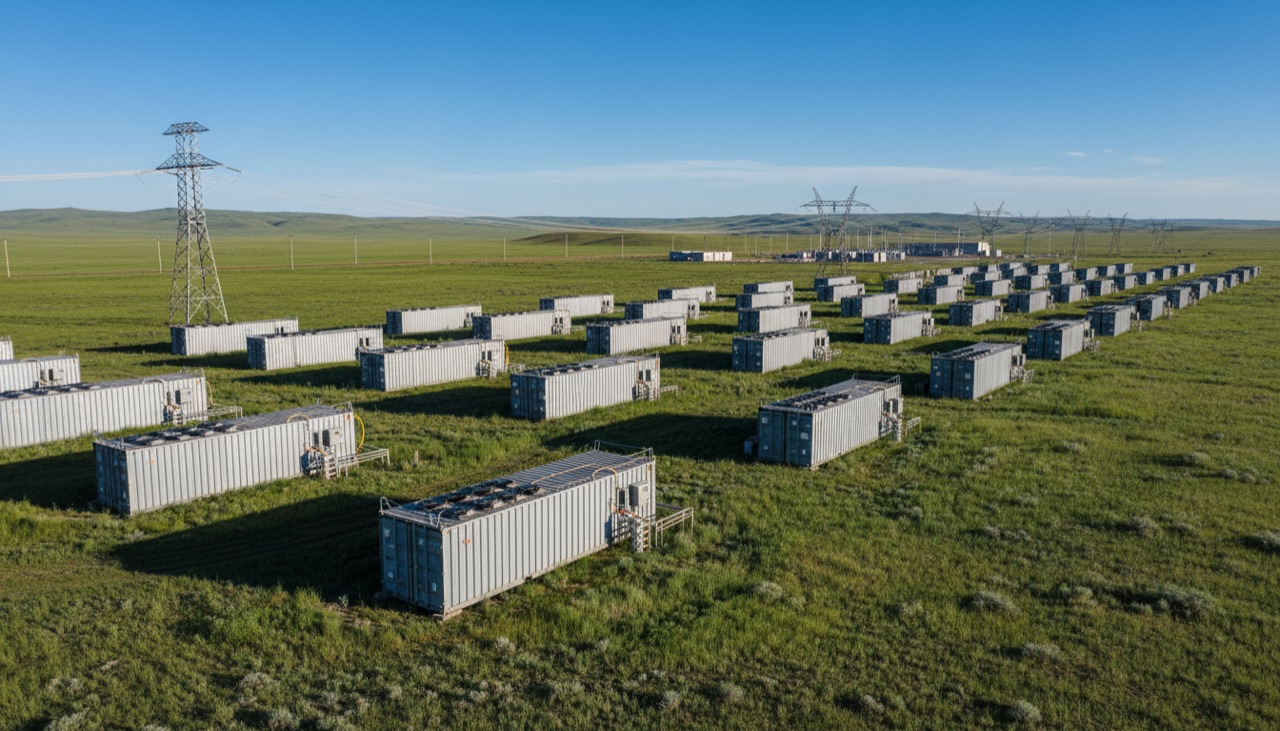
Kazakhstan miners benefit from low electricity ($0.03-0.04/kWh historically) but face a growing regulatory framework. Law No. 193-VII (in force since April 1, 2023) requires mining licensing and pool accreditation, and since August 1, 2026, "strategic miners" (150 MW+) must contribute 10% of mined coins to a national crypto reserve. The best pool depends on your payout frequency needs, fee tolerance, and whether you want exchange integration for converting BTC to tenge. Pools with low minimum payouts (EMCD at 0.0001 BTC, Tpool at 0.0001 BTC) and exchange-linked options (Binance Pool, ViaBTC) make the most sense for most Kazakhstan-based operations. Compare all pools and run the numbers at pool-btc.com/calc/en/.
Why does pool choice matter more in Kazakhstan than in the US or EU?
Pool choice matters more in Kazakhstan because the gap between a good and bad setup is wider here. Electricity runs $0.03-0.04/kWh in many locations, which means hardware ROI depends heavily on pool fees and payout efficiency rather than power costs alone. A 4% FPPS pool versus a 0.9% FPPS pool on a 200 TH/s rig translates to real dollars over months. Add the complexity of converting BTC to Kazakhstani tenge, and the pool's ecosystem (exchange integration, low minimums, payout frequency) starts to matter as much as the fee itself.
Kazakhstan's regulatory framework for mining has grown more structured since 2023. Law No. 193-VII on digital assets, in force since April 1, 2023, introduced mining licensing and accreditation requirements for mining pools (source: Library of Congress, April 2023). Miners selling mined assets must route at least 75% of sales through AIFC-regulated platforms since January 1, 2025 (secondary source: loc.gov; note: the official adilet.zan.kz text was not independently verified for this article). Since August 1, 2026, "strategic miners" operating at 150 MW or above must contribute 10% of mined coins to a national crypto reserve and receive a 10-year power quota in return (incrypted.com, July 24, 2026). This evolving framework makes it worth choosing pools that don't require extensive KYC for basic mining operations, so you retain flexibility.
Which pools offer the lowest fees for Kazakhstan miners?
The lowest-fee pools available to Kazakhstan miners are Tpool (0.9% FPPS) and Trustpool (1% PPS+). Both charge less than a quarter of what the big-name pools take. Here is how the fee landscape breaks down across all BTC-supporting pools:
| Pool | Fee | Payout model | Min. payout | Notes |
|---|---|---|---|---|
| Tpool | 0.9% | FPPS | 0.0001 BTC | Pool pays network fees, daily payouts |
| Trustpool | 1% | PPS+ | 0.001 BTC | Community-oriented, low fees |
| NiceHash | 2% | RTPPS | 0.00001 BTC | Hashrate marketplace, ultra-low minimum |
| Luxor | 2.5% | FPPS | 0.001 BTC | Pro analytics, US-focused |
| Kryptex Pool | 3% | PPS+ | 0.001 BTC | Convenient for Kryptex users |
| Promminer | 3% | FPPS | 0.0001 BTC | BTC mining pool |
| AntPool | 4% | FPPS/PPS/PPLNS | 0.005 BTC | Large ecosystem, multi-coin |
| ViaBTC | 4% | PPS+/PPLNS | 0.001 BTC | Auto-conversion; PPLNS at 2% |
| F2Pool | 4% | FPPS/PPLNS | 0.005 BTC | Long-running global pool; PPLNS at 2% |
| Binance Pool | 4% | FPPS | n/a | Direct Binance exchange integration |
| EMCD | 4% | FPPS | 0.0001 BTC | Wallet + exchange services built in |
| Foundry USA | undisclosed | FPPS | 0.01 BTC | Institutional, KYC required, tiered pricing |
For a full side-by-side with live data, see pool-btc.com.
How do I convert BTC to Kazakhstani tenge after mining?
Converting mined BTC to tenge is one of the practical problems Kazakhstan miners face. Three approaches work, depending on your volume and comfort with KYC:
- Mine to Binance Pool and sell BTC for KZT directly on Binance P2P. Binance holds a full AFSA license in Kazakhstan since September 2024, and KZT P2P trading is available through local banks including Kaspi and Halyk. The pool-to-exchange step disappears entirely since payouts land in your Binance account.
- Mine to any pool, withdraw to an exchange (Bybit, OKX, or Binance), and sell via P2P for tenge. Bybit launched KZT/USDT spot trading in Kazakhstan on April 2, 2026 (chainwire.org, April 2026), and both Bybit and OKX have active KZT P2P listings (p2p.army, September 2026). P2P spreads typically run 0-0.5%.
- Use a local exchanger listed on aggregator sites. Faster but usually 1-3% spread. Compare options at pool-btc.com/exchange/en/.
EMCD is worth considering here because it bundles wallet and exchange services into one platform, reducing the number of accounts you need. ViaBTC offers auto-conversion, which can simplify the process if you want to hold altcoins instead.

Do mining pools require KYC, and does that matter in Kazakhstan?
Most mining pools do not require KYC for basic mining and payouts. You connect your ASIC, point it at a stratum URL, and receive BTC to your pool wallet. Trustpool does not even require registration. The major exception is Foundry USA, which requires an application and full KYC verification because it targets institutional miners.
Binance Pool requires a Binance account, which means completing Binance's KYC process. Binance holds a full AFSA license in Kazakhstan (since September 2024), so KZ-based miners can complete KYC through the standard flow.
For miners who want to minimize identity verification steps, pools like Tpool, Trustpool, EMCD, and ViaBTC let you start mining without KYC.
What about server locations and latency from Kazakhstan?
Latency between your ASIC and the pool's stratum server affects your stale share rate. Even 50ms of extra latency has minimal impact on BTC profitability (stale shares typically stay below 0.1%), so this is not a dealbreaker for most setups. Still, lower latency is always better.
Known stratum server locations as of September 2026:
| Pool | Server regions |
|---|---|
| AntPool | US, EU, Asia (stratum.antpool.com) |
| F2Pool | Global (btc.f2pool.com) |
| EMCD | US, EU, Asia, Russia |
| Binance Pool | Single global host: sha256.poolbinance.com, ports 8888/3333/1800/443 (Binance support) |
| Tpool | Tpool does not publish stratum server locations on its public site (checked 28.09.2026); get the address from your dashboard after sign-up |
Kazakhstan sits between the EU and Asia nodes of most global pools. Miners in Almaty typically get lower latency to Asian servers, while Astana-based operations may see similar latency to both EU and Asia endpoints.
If you find that a pool's servers add noticeable latency, a mining proxy can route your traffic more efficiently. VPN adds 5-50ms typically but encrypts your connection, which can help if your ISP throttles mining traffic.
Which pool is best for a small farm in Kazakhstan (1-5 ASICs)?
For a small operation with 1-5 ASICs, the priority is low minimum payouts and low fees. Waiting to accumulate 0.01 BTC before your first payout ties up capital unnecessarily. The best options:
- Tpool: 0.9% fee, 0.0001 BTC minimum, daily payouts, pool covers network fees. The lowest total cost option.
- EMCD: 4% fee (higher), but 0.0001 BTC minimum and integrated wallet/exchange. Fewer accounts to manage.
- NiceHash: 2% fee, 0.00001 BTC minimum. You sell hashrate rather than mine blocks directly. Simplest setup if you want BTC without thinking about block variance.
For larger farms, the fee percentage matters more than payout minimums, pushing Tpool and Trustpool to the front.
Use the POOL BTC profitability calculator to compare net daily income across fee structures for your specific hardware. The miner ranking shows which ASICs deliver the best efficiency in watts per terahash.
Does Kazakhstan's electricity cost give miners an edge?
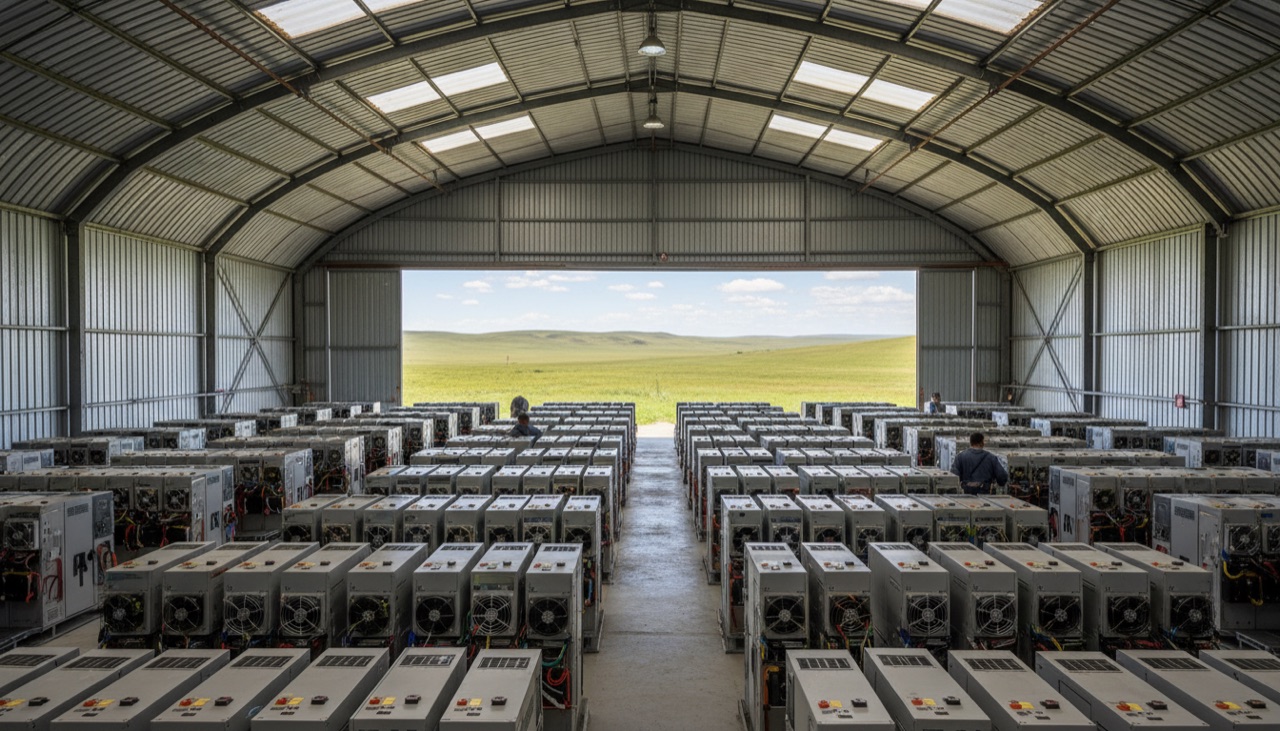
Kazakhstan's electricity has historically run $0.03-0.04/kWh for mining operations, making it one of the cheaper locations globally. For context, $0.05-0.06/kWh is considered standard in both Russia and Kazakhstan, and anything under $0.045/kWh all-in is excellent.
Here is what a single Antminer S21 Pro (234 TH/s, 3,510 W) earns at $0.04/kWh, using the hashprice of $40.93/PH/day recorded on September 21, 2026 (Hashrate Index):
- Daily revenue: 0.234 PH x $40.93/PH/day = $9.58
- Daily power cost: 3.51 kW x 24 h x $0.04/kWh = $3.37
- Gross daily profit (before pool fee): $6.21
- After a 0.9% fee (Tpool): $6.12/day. After a 4% fee: $5.83/day.
The fee gap between a 0.9% pool and a 4% pool amounts to roughly $0.30/day per machine. Over a year, that is about $109 per S21 Pro, which adds up across a farm.
The edge is real but narrowing. The regulatory framework in Kazakhstan has become more structured (see law section above), and some miners have relocated operations to Russia, where the legal framework for mining has been settled since late 2024. If you already have a site and power contract in Kazakhstan, the economics still work. Starting fresh, factor in regulatory requirements (licensing, AIFC sales obligations, and the strategic miner rules for large operations) alongside raw electricity cost.
Hosting (colocation) is another option. Data centers in Kazakhstan offer $0.03-0.05/kWh with cooling and maintenance included. Compare providers at pool-btc.com/hosting/en/.
FAQ
Can I mine Bitcoin legally in Kazakhstan?
Yes, with a license. Law No. 193-VII on digital assets (in force since April 1, 2023) requires mining licensing and pool accreditation. Miners selling mined assets must route at least 75% of sales through AIFC-regulated platforms (since January 1, 2025; based on secondary sources, official adilet text not independently verified). Since August 1, 2026, operations at 150 MW or above qualify as "strategic miners" with additional obligations. (Library of Congress, incrypted.com, July 2026)
Which payout model should I pick: FPPS or PPLNS?
FPPS gives you a fixed rate per share plus a cut of transaction fees, paid daily. Variance is low, income is predictable. PPLNS pays based on actual blocks found, meaning higher variance but potentially higher long-term returns if you keep your machines running consistently. Most Kazakhstan miners with small-to-mid farms prefer FPPS for cash flow stability.
Is Binance Pool available in Kazakhstan?
Binance holds a full AFSA license in Kazakhstan since September 2024 and operates in the country. No specific geo-restrictions on Binance Pool for Kazakhstan users were found as of September 2026. KZT P2P trading is available through local banks (Kaspi, Halyk).
What ASIC should I buy for mining in Kazakhstan in 2026?
The most efficient models right now are the Antminer S21 Pro (234 TH/s, 15 W/TH) and WhatsMiner M60S++ (230 TH/s, 15.5 W/TH). At Kazakhstan's electricity rates, efficiency matters less than in high-cost regions, but newer hardware still pays back faster. See the full ranking at pool-btc.com/miners-rank/en/.
Does pool-btc.com support Kazakh language?
Yes. The site is available in Kazakh at pool-btc.com/kk/, including the blog, miner rankings, and card comparisons.
This article contains referral links to mining pools (marked as sponsored). We may receive a reward if you register through them. This does not change the figures or the order of rows in the tables: the terms are taken from the pools' official pages.