
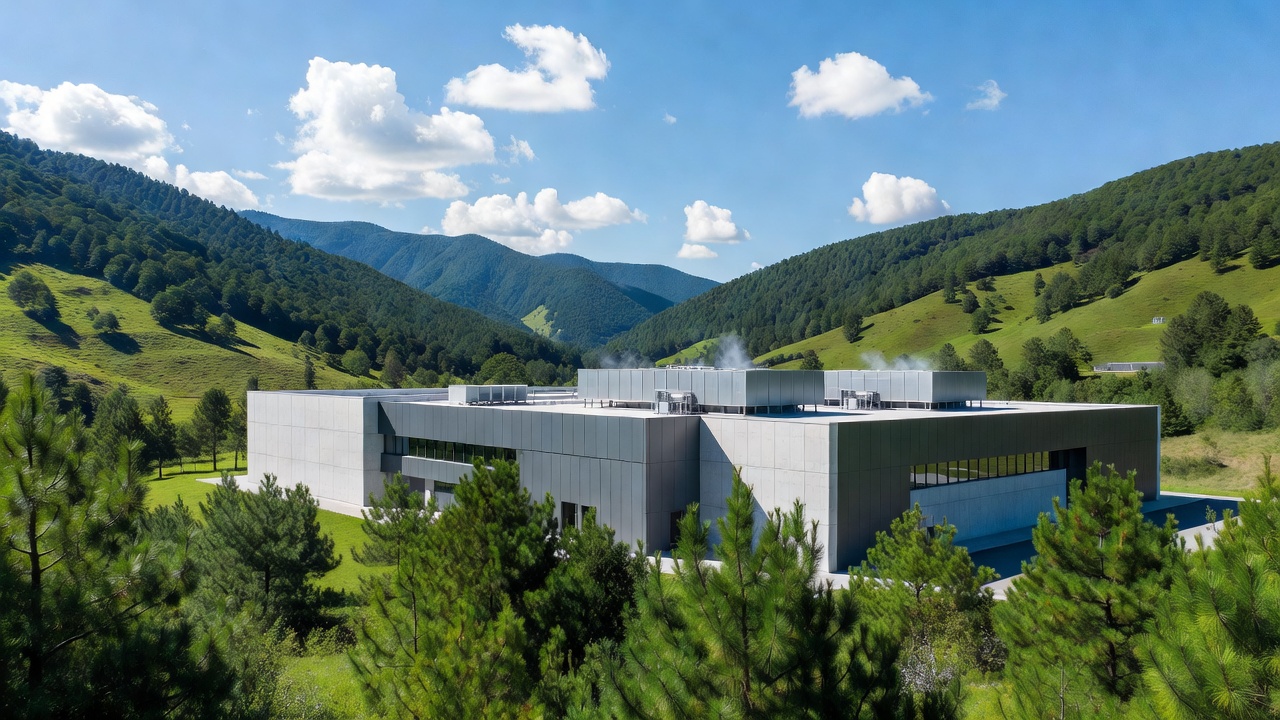
Miner hosting 2026: how to choose a data centre for ASICs
Miner hosting (colocation) means a data centre takes your ASIC devices, racks them, and supplies power, cooling, and internet for a fixed per-kWh rate. POOL BTC maintains a hosting provider comparison - below we break down how to choose, what to check in a contract, and when hosting simply is not worth it.
What is miner hosting?
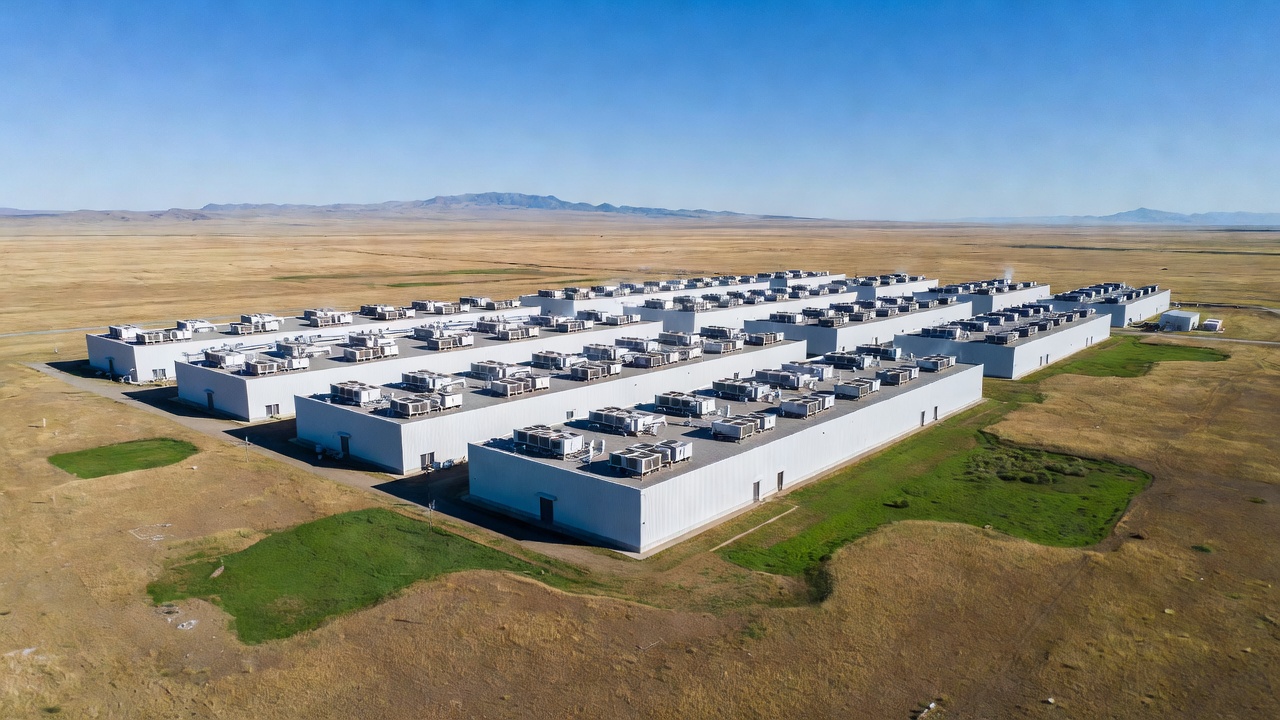
Hosting (colocation / colo) is renting rack space in an industrial data centre for your own equipment. You remain the hardware owner, pay a per-kWh tariff, and get ready infrastructure: three-phase power, industrial cooling, redundant internet, and physical security.
The alternative is home mining or your own facility. Here is how they compare:
| Factor | Hosting | Home / own facility |
|---|---|---|
| Power tariff | Wholesale, $0.03-0.05/kWh | Retail, $0.05-0.12/kWh |
| Cooling | Industrial, 24/7 | Home-grade, noise, summer heat risk |
| Uptime | 97-99.9% by SLA | Depends on you, no guarantee |
| Security | Guards, CCTV | Home-level, theft risk |
| Internet | Redundant links | Single ISP, single point of failure |
| Scalability | Easy to add capacity | Limited by wiring and space |
| CAPEX | None (pay per slot) | Infrastructure at your own cost |
| Control | Remote monitoring | Full but manual |
Rates and regions 2026
Power cost is the single biggest factor in mining profitability. At hashprice ~$46/PH/day, a $0.01/kWh difference on a 20 kW miner is roughly $4-5 net per day. Indicative regional rates:
| Region | Rate | Notes |
|---|---|---|
| Kazakhstan | ~$0.03/kWh | Cheapest rate, solid infrastructure |
| Irkutsk (RU) | ~$0.035/kWh | Hydro power, low tariffs, popular region |
| Novosibirsk (RU) | ~$0.04/kWh | Below Russian average, good logistics |
| Karelia (RU) | ~$0.042/kWh | Hydro power, cold climate cuts cooling OPEX |
| Krasnodar (RU) | ~$0.055/kWh | Higher rate but close to European Russia |
Current offers and provider comparison: POOL BTC hosting page. Longer contracts (12+ months) are typically 10-20% cheaper than month-to-month.

What to look for in the contract
Most hosting problems come not from the rate but from a poorly read contract. Common traps:
| Clause | What it means for you |
|---|---|
| SLA uptime < 95% | Up to 5% revenue loss with no compensation |
| No equipment insurance | Fire or theft is fully your loss |
| Equipment removal < 30 days | Facility closure may leave gear in limbo |
| Internet not included | Extra channel fee - hidden cost |
| No force-majeure clause | Grid outages may not be compensated |
Pay special attention to the service termination clause: a reputable host gives 30+ days to remove equipment if they close. Anything shorter is a warning sign. Negotiate equipment liability insurance or arrange your own policy before delivery.
Mini case study: in 2023-2024 several small hosting operators in Russia and Kazakhstan shut down with no advance notice. Equipment was frozen for weeks and some miners never recovered all their devices. Those who had a signed equipment acceptance act fared significantly better in dispute resolution.
5-step hosting selection checklist
- Rate below $0.05/kWh. Run the numbers in the POOL BTC calculator at your hashrate and the quoted hosting tariff. If break-even does not work out - do not sign.
- SLA at or above 97% uptime. Ask how downtime is compensated: the best facilities credit the lost period or discount the next invoice.
- Verified legal entity. Check company registration, operating history, and public reviews. Anonymous facilities accepting crypto-only payments are a red flag.
- Client references. Ask for two or three contacts of active customers who have had equipment there for six months or more. A legitimate host will not refuse.
- Site visit. See the racks, cooling units, and backup generator in person. If a visit is refused, look elsewhere.
When hosting is not the right choice
Hosting solves expensive home electricity - but it is not always necessary:
- Home rate below $0.04/kWh. In some Russian regions or with preferential tariffs, the home rate is close to hosting - run the numbers before committing.
- 1-2 ASICs. Small volumes rarely qualify for discounted rates, and shipping plus a deposit can wipe out months of savings.
- Horizon under 6 months. Setup costs (shipping, configuration, deposit) typically break even in 3-4 months at a good rate. A short contract turns hosting unprofitable.
- Non-functional hardware. Hosting charges rent regardless of whether your device mines. Fix or sell broken ASICs before signing a colocation agreement.
Use the POOL BTC calculator to compare hosting rate vs home rate. For pool fee comparison, see the POOL BTC ranking.
Frequently asked questions
What is typically included in a hosting tariff?
Power, rack space, cooling, and basic monitoring. Internet connectivity, maintenance, and insurance are often separate line items - always confirm before signing.
How do I verify a hosting provider before signing?
Ask for active client references, check the legal entity in the business registry, review the SLA and termination clause, and visit the site in person if at all possible. Always sign an equipment acceptance act when delivering hardware.
What is the difference between immersion and air cooling?
Immersion cooling (submerging hardware in dielectric fluid) is quieter and more efficient at high power density but costs more to operate and not all ASICs support it. Air cooling is the standard and requires no hardware modification.
What should I do if a hosting provider shuts down?
Immediately send a written request for equipment return, citing your acceptance act as proof of which specific devices were on site. If the provider does not respond, document all correspondence for potential legal action.
Which region offers the best hosting rates in 2026?
Kazakhstan (~$0.03/kWh) and Irkutsk (~$0.035/kWh) are typically the cheapest. Karelia and Novosibirsk are below the Russian average. Krasnodar is higher but closer to western Russia. See the POOL BTC hosting page for current offers.