
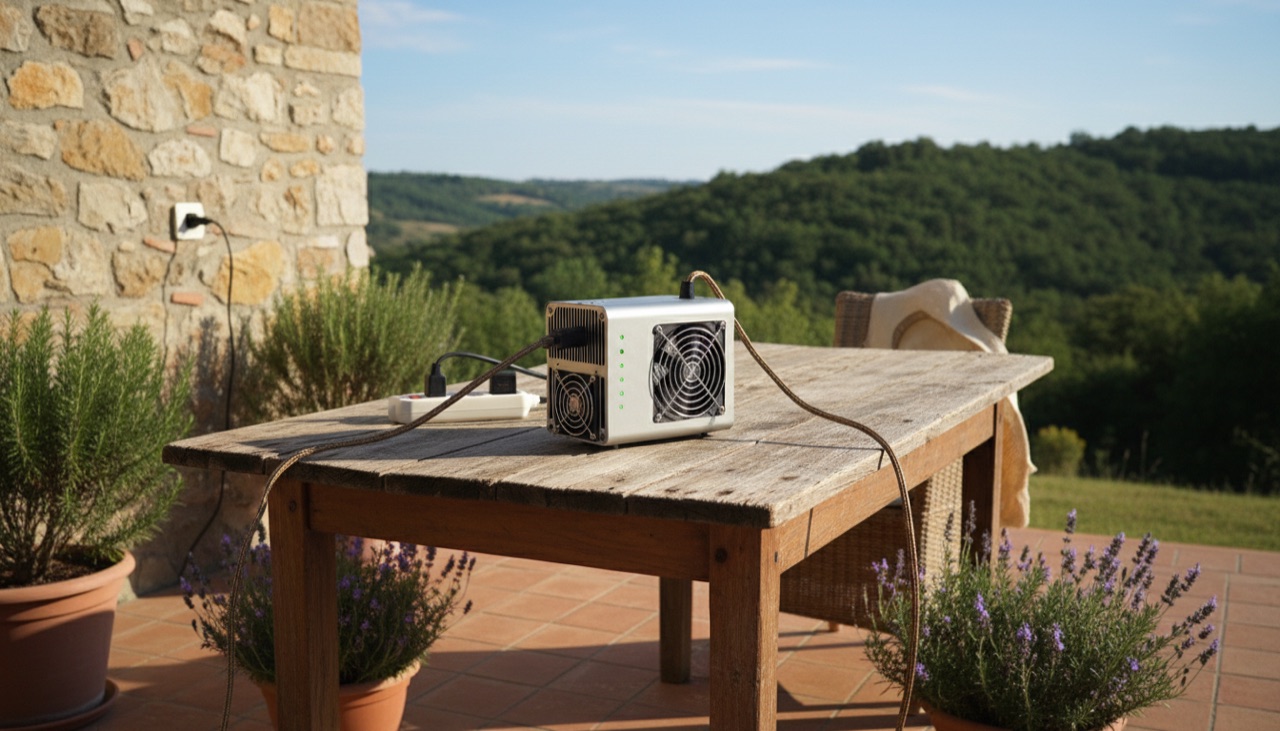
NiceHash vs a Regular Pool: When Selling Hashrate Pays More
NiceHash is a hashrate marketplace where buyers rent your mining power, and you get paid in BTC regardless of what coin they mine. A regular pool pays you block rewards directly. NiceHash typically works better when hashrate demand is high or you want zero-config payouts. A low-fee pool wins on steady, long-term BTC mining income. The choice comes down to your hardware, your electricity cost, and how much you value simplicity over optimization.
Important: NiceHash is not available in Russia. The service blocked Russian users on November 12, 2024, after announcing its exit from the country on October 30, 2024 (source). Russian miners should look at alternatives in our best pool for Russia guide.
What is NiceHash and how is it different from a mining pool?
NiceHash is a hashrate marketplace, not a traditional mining pool. Instead of joining a pool and earning a share of block rewards, you sell your computing power to buyers who direct it wherever they want. You get paid in BTC no matter what algorithm or coin the buyer targets. A regular pool connects your ASIC to the Bitcoin network directly, and you earn BTC from blocks the pool finds.
The key difference: on a pool, your income tracks Bitcoin block rewards and transaction fees. On NiceHash, your income tracks what buyers are willing to pay for hashrate, which can be higher or lower than direct mining, depending on market conditions.
NiceHash charges a 2% service fee for miners and uses an RTPPS (Real Time Pay Per Share) payout model, with a minimum payout of just 0.00001 BTC to the internal wallet (source: official NiceHash documentation, verified 2026-08-18).
How do fees compare?
Fee structure matters because it directly eats into your daily revenue. Here is how NiceHash stacks up against popular BTC pools:
| Pool | Fee | Payout model | Min. payout |
|---|---|---|---|
| NiceHash | 2% | RTPPS | 0.00001 BTC |
| Tpool | 0.9% | FPPS | 0.0001 BTC |
| Trustpool | 1% | PPS+ | 0.001 BTC |
| Luxor | 2.5% | FPPS | 0.001 BTC |
| Kryptex Pool | 3% | PPS+ | 0.001 BTC |
| F2Pool | 4% | FPPS / PPLNS | 0.005 BTC |
| AntPool | 4% | FPPS / PPS / PPLNS | 0.005 BTC |
| ViaBTC | 4% | PPS+ / PPLNS | 0.001 BTC |
All fees verified against official pool documentation as of 2026-08-18. Terms change. Verify at the pool before routing hashrate.
On fees alone, NiceHash at 2% sits in the middle. Tpool (0.9%) and Trustpool (1%) charge less. But the NiceHash fee covers the marketplace infrastructure, instant payouts, and algo-switching. The real question is whether the hashrate price on the marketplace covers that gap.
When does NiceHash pay more than a regular pool?
NiceHash pays more in specific market conditions. The hashrate marketplace price rises when buyers compete for mining power, which happens during altcoin profitability spikes, new coin launches, or when someone needs hashrate for a short-term purpose. In those moments, you can earn a premium over what you would make mining BTC directly.
Three situations where NiceHash tends to win:
- Altcoin profitability spikes. Buyers rent SHA-256 hashrate to mine newly launched or pumping coins. You get BTC at above-market rates without touching the altcoin yourself.
- GPU or mixed-algo rigs. If you run GPUs or multi-algorithm hardware, NiceHash auto-switches to the most profitable buyer. This is harder to replicate manually across pools.
- Small operators who value simplicity. One dashboard, one payout currency, no pool-hopping. The 2% fee buys convenience.

When does a regular pool pay more?
For dedicated Bitcoin ASICs running 24/7, a low-fee FPPS pool almost always beats NiceHash on raw BTC per terahash. The math is straightforward: FPPS pools pay you the expected value of each share including transaction fees, minus the pool fee. With Tpool at 0.9% or Trustpool at 1%, you keep 1-1.1% more of each share than on NiceHash.
Over months of continuous mining, that fee difference compounds. A miner running an Antminer S21 Pro (234 TH/s, 15 W/TH) loses about 1.1% of gross daily revenue to the fee gap between NiceHash (2%) and Trustpool (1%). On a hypothetical gross daily revenue of 0.00050 BTC, that is roughly 0.0000055 BTC per day, or about 0.002 BTC per year.
The percentage stays the same regardless of BTC price, but on a $60,000 BTC, that 0.002 BTC equals about $120 per year per machine. Scale to ten machines and the difference buys another ASIC over time.
Worked example: Antminer S21 Pro on NiceHash vs Tpool
Here is a side-by-side using clearly labeled hypothetical inputs:
Assumptions (hypothetical):
- Miner: Antminer S21 Pro, 234 TH/s, 15 W/TH
- Power draw: 234 x 15 = 3,510 W
- Electricity cost: $0.06/kWh
- Daily electricity: 3,510 W x 24h / 1,000 = 84.24 kWh = $5.05/day
- Hypothetical gross daily BTC revenue: 0.00050 BTC
- BTC price (hypothetical): $60,000
| NiceHash (2%) | Tpool (0.9%) | |
|---|---|---|
| Gross daily BTC | 0.00050 | 0.00050 |
| Pool/marketplace fee | 0.00001 BTC | 0.0000045 BTC |
| Net BTC after fee | 0.00049 | 0.0004955 |
| Net BTC in USD | $29.40 | $29.73 |
| Electricity cost | $5.05 | $5.05 |
| Daily profit | $24.35 | $24.68 |
| Monthly profit | $730.50 | $740.40 |
Difference: about $9.90/month, or $119/year per machine in favor of Tpool.
This assumes NiceHash marketplace price equals the theoretical FPPS value. In practice, NiceHash price fluctuates. During demand spikes, it can exceed FPPS value. During low-demand periods, it drops below.
Use our profitability calculator to plug in your own numbers and compare results with current conditions.
What about payout speed and thresholds?
NiceHash has the lowest minimum payout in the industry at 0.00001 BTC (internal wallet). That means even a single GPU starts accumulating real payouts almost immediately. Tpool and Promminer come next at 0.0001 BTC, while pools like F2Pool and AntPool require 0.005 BTC before sending any funds.
For small miners, this matters. If your rig earns 0.0001 BTC per day, reaching a 0.005 BTC payout threshold takes 50 days. On NiceHash, you see funds in your wallet daily.
Who should use NiceHash?
- GPU miners who want automatic algorithm switching
- Small operators (under 50 TH/s) who prefer daily payouts over waiting for threshold
- Miners in volatile markets who want to capitalize on hashrate demand spikes
- People who want simplicity over maximum extraction
Who should use a regular pool?
- ASIC miners running dedicated Bitcoin hardware 24/7
- Medium to large farms where the fee percentage difference multiplies across machines
- Long-term miners focused on steady BTC accumulation
- Operators who want FPPS predictability over marketplace fluctuation
Check the ASIC efficiency rankings to see which hardware makes the biggest impact on your bottom line.
FAQ
Can I switch between NiceHash and a regular pool?
Yes. Your ASIC or GPU rig can point to any pool or NiceHash at any time. Just change the stratum address in your miner configuration. There is no lock-in.
Does NiceHash work with all ASIC miners?
NiceHash supports SHA-256 ASICs for Bitcoin-related hashrate selling. You configure your ASIC's stratum URL to NiceHash just like any pool.
Is NiceHash riskier than a regular pool?
The main risk is price volatility on the marketplace. On a pool, your income per share is predictable (especially FPPS). On NiceHash, it depends on buyer demand. Your hardware and electricity costs stay the same either way.
What if NiceHash marketplace price drops below FPPS value?
You can switch to a regular pool at any time. Some miners monitor both and route hashrate to whichever pays more at the moment.
Is NiceHash available in Russia?
No. NiceHash blocked Russian users on November 12, 2024 (source). See our best pool for Russia guide for alternatives.
Does pool-btc.com track NiceHash profitability?
Pool-btc.com compares pool fees and payout models across 17 pools including NiceHash. Use the calculator to estimate daily income under different fee structures.
This article contains referral links to mining pools (marked as sponsored). We may receive a reward if you register through them. This does not change the figures or the order of rows in the tables: the terms are taken from the pools' official pages.