
Bitcoin mining difficulty drops 10%: what it means in June 2026
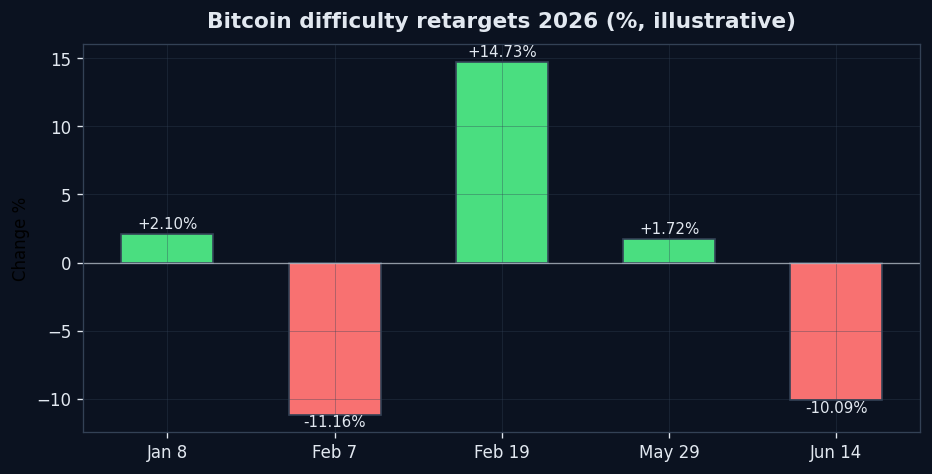
On June 14, 2026 at block 953,568, Bitcoin difficulty fell 10.09%: from 138.96 T to 124.93 T. That is the 11th-largest negative retarget in network history and the second-biggest drop of 2026. POOL BTC is a mining-pool comparison site and profitability calculator that applies hashprice and difficulty to net BTC/day. Below: the numbers, causes, and what to do on FPPS.
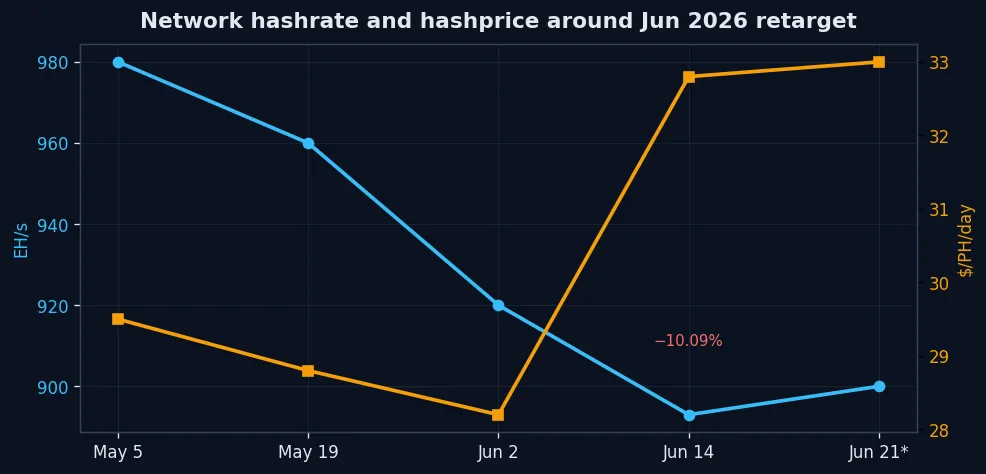
Difficulty -10.09% at block 953,568 (Jun 14, 2026), lowest since July 2025. Network hashrate ~893 EH/s, hashprice up to ~$33/PH/day. Check your case in the POOL BTC calculator and mempool.space.
What happened to difficulty on June 14, 2026?
Bitcoin retargets difficulty every 2016 blocks (~14 days) to keep average block time near 10 minutes. If blocks were slower than target, difficulty drops.
This epoch logged hashrate outflows and cut difficulty by 10.09%. The new 124.93 T reading is 2026's low and the weakest level since July 12, 2025. For context: the October 2025 all-time high was 155.27 T.
Epoch data: mempool.space; hashprice: Hashrate Index.
| Date | Change | Before | After |
|---|---|---|---|
| Jun 14, 2026 | -10.09% | 138.96 T | 124.93 T |
| May 29, 2026 | +1.72% | 136.61 T | 138.96 T |
| Feb 7, 2026 | -11.16% | 141.67 T | 125.86 T |
| Feb 19, 2026 | +14.73% | 125.86 T | 144.40 T |
| Jan 8, 2026 | +2.1% (peak) | 143.50 T | 146.47 T |
Why did difficulty fall 10%?
A negative retarget means miners idled gear or cut uptime. In June 2026 several drivers stacked:
- BTC price - ~15% monthly drop pushed margins below shutdown thresholds on expensive power;
- Hashrate - network fell from 1,000+ EH/s toward ~893 EH/s;
- Texas summer - large farms join grid curtailment programs in peak heat;
- AI/HPC shift - some sites reallocate capacity (see mining vs AI in 2026).
Post-2024 halving volatility continues: seven of twelve 2026 epochs ended negative. February's -11.16% drop was followed by +14.73% - the year's wildest back-to-back cycle.
| Driver | POOL BTC: what metrics show |
|---|---|
| BTC price | ~15% June drop squeezed margins; some ASIC fleets idled |
| Hashrate | Network fell from ~1,000 EH/s toward ~893 EH/s at retarget |
| Texas | Summer grid programs: curtailment during peak demand hours |
| AI/HPC | Some capacity shifted to AI inference (see article 25) |
| Hashprice | After -10% difficulty, rose to ~$32-33/PH/day (+13%) |
How does a difficulty drop affect hashprice?
Hashprice is revenue per 1 PH/s per day. With the same BTC price and fees, a 10% difficulty cut yields roughly +11% BTC for the same hashrate.
After the June 14 retarget, Hashrate Index hashprice rose from ~$28-29 to ~$32-33/PH/day (+13%). That is not automatic profit: at ~$64,000 BTC and $0.08/kWh, an Antminer S21 can still sit near breakeven before depreciation. See BTC production cost for formulas.
POOL BTC's calculator refreshes difficulty and hashprice for net BTC/day after pool fee and power.
What should miners do after a -10% difficulty cut?
Short FPPS checklist:
- Recompute net at ~$33/PH/day hashprice and your power rate.
- Compare pools: 0.5-1% fee gaps matter on thin margins.
- Restore idle lines if breakeven is cleared after the hashprice bump.
- Do not chase difficulty: next retarget ~Jun 27-28, early forecast +1-2%.
- Check hardware efficiency in the miners rank (J/TH).
On expensive home power, a -10% difficulty relief may not offset summer bills. Colocation at 3-5.5 RUB/kWh feels the lift more.
When is the next retarget and where is difficulty headed?
The next epoch is expected around June 27-28, 2026. Early models point to a mild +1.7% rise as block times normalize and some hashrate returns. If BTC stays weak, another outflow and negative epoch are possible.
2026 range: January peak 146.47 T vs 124.93 T now - a ~21.5 T swing. The network is still larger than a year ago, but the correction eases pressure on older ASIC fleets.
FAQ
How much did Bitcoin mining difficulty drop in June 2026?
10.09%: from 138.96 T to 124.93 T at block 953,568 on June 14, 2026. The 11th-largest negative retarget in Bitcoin history.
Why does difficulty fall?
Average block time exceeded 10 minutes: miners idled gear due to BTC price, power rates, seasonal curtailment, or AI/HPC reallocations.
Will revenue rise after a difficulty drop?
Usually yes, all else equal: hashprice climbed to ~$33/PH/day. Net profit still depends on power, pool fee, and uptime. Use the POOL BTC calculator.
Is this 2026's worst drop?
No. On February 7, 2026 difficulty fell 11.16%. The current -10.09% is the year's second-largest negative move.
Where to track difficulty live?
mempool.space and the pool-btc.com calculator. For hashprice, use Hashrate Index.