
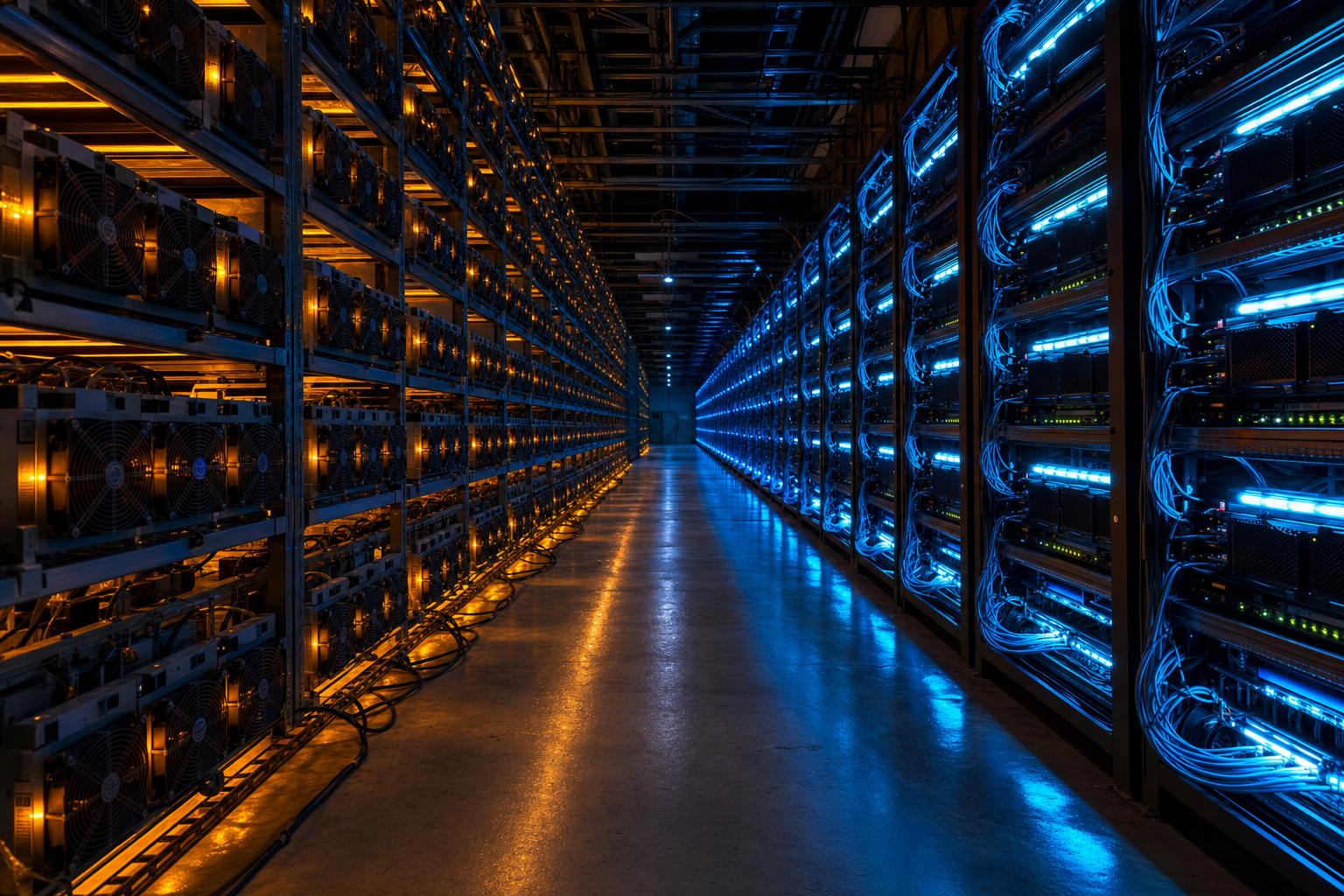
Miners pivot to AI and HPC: what it means for Bitcoin pools in 2026
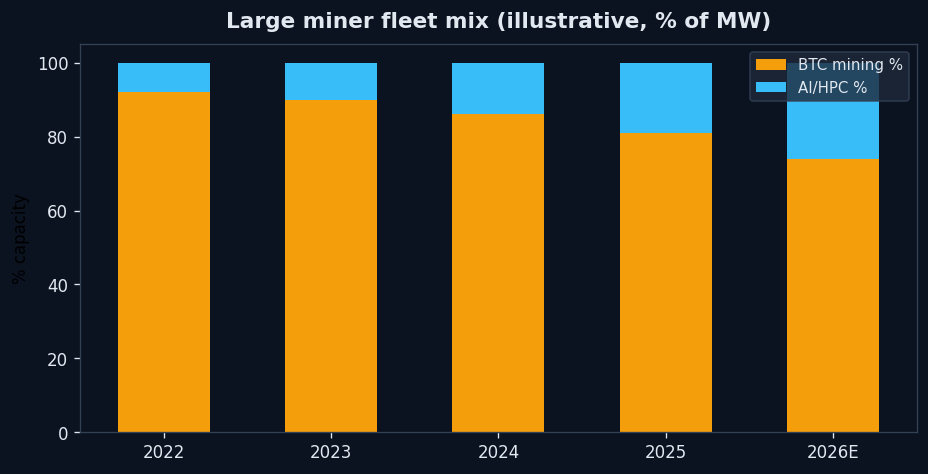
In 2026 a slice of large operators is shifting capacity from pure Bitcoin mining into AI and HPC hosting (GPU clusters, inference, batch jobs). The BTC network still grows (~745 EH/s in May), but for POOL BTC - a mining-pool comparison site and profitability calculator - the shift matters for pool hashrate, FPPS payouts, and infrastructure choices. Below: the trend, numbers, and practical takeaways for miners.
large fleets may send ~26% of capacity to AI/HPC by 2026 (illustrative), BTC hashprice stays near $46/PH/day, pools with stable low-fee FPPS win operators who stay on SHA-256, and home miners should optimize power below $0.06/kWh rather than chase GPUs.
Why are miners moving into AI and HPC in 2026?
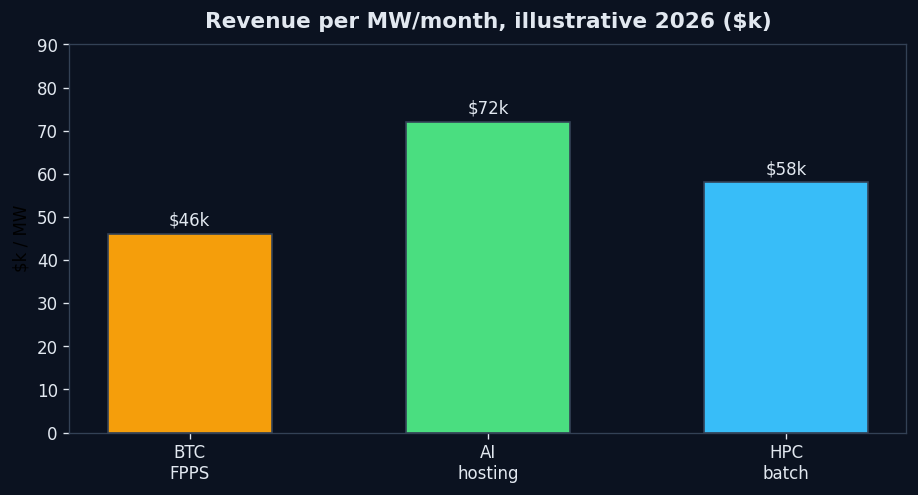
After the 2024 halving, pure BTC margins tightened: at ~$95,000 BTC and ~$46/PH/day hashprice, 100 MW of ASICs earns roughly $4.6M/month before power, while the same shell for AI hosting (GPU, multi-year contracts) can reach $6-9M/month at 70-85% utilization. HPC adds seasonal batch work (rendering, simulation, research) with higher peaks but lumpier load.
Public miners (Marathon, Core Scientific, Riot, and others) now announce hybrid sites - part of the racks stay on Antminer S21, part is rebuilt for NVIDIA H100/H200 and denser cooling.
How does this affect Bitcoin mining pools?
For a pool, losing 10-20% of a whale's hashrate hurts block luck unless replaced. In 2026 pools respond by:
- FPPS with tx fees - predictable cash flow keeps small and mid miners;
- Enterprise SLAs - fixed uptime, dedicated stratum shards, CFO-friendly APIs;
- Geography - cheap-power regions without GPU competition for the same building.
Operators who stay on BTC compare net after pool fee: 1% on 200 PH/s is ~$30-40k/year. See FPPS vs PPLNS and the May 2026 report. For inference APIs see Gonka AI API.
Bitcoin mining vs AI/HPC: operator comparison
| Factor | BTC mining (ASIC) | AI/HPC (GPU) |
|---|---|---|
| Hardware | SHA-256 ASIC (S21, M60S) | NVIDIA H100/H200 GPU clusters |
| Revenue / 1 MW | ~$46k/mo (hashprice) | ~$60-90k/mo at 75% load |
| CAPEX payback | 12-18 mo at $0.06/kWh | 18-30 mo (contract-dependent) |
| Risk | difficulty, BTC price | contract, GPU depreciation, cooling |
| Pool link | Stratum, FPPS/PPLNS | usually direct contract, not a pool |
| Power | $0.05-0.08/kWh critical | $0.06-0.10/kWh, PUE matters |
What should miners do - and how POOL BTC helps
If you stay on Bitcoin:
- use a low-fee transparent FPPS pool (see the POOL BTC ranking);
- recalculate net in the calculator with uptime > 97%;
- do not buy GPUs for BTC - post-merge alt GPU mining is a different business.
Hybrid operators (ASIC + AI) should separate hashrate accounting from GPU contracts. POOL BTC tracks the BTC branch but publishes industry context for owners and CFOs.
Difficulty and hashprice: mempool.space. Data-center energy context: IEA.
Frequently asked questions
Are all miners leaving Bitcoin for AI?
No. The BTC network still grows in 2026, but large public companies may steer ~26% of capacity to AI/HPC. Smaller regional farms often stay on ASIC.
Do pools earn less because of AI?
Indirectly: less whale hashrate adds variance on PPLNS. FPPS payouts stay steadier, so pools push FPPS and lower fees.
Should a miner buy GPUs instead of ASICs?
Not for Bitcoin - you need SHA-256 ASICs. GPUs are a separate AI/HPC business with different contracts, not a Stratum pool substitute.
How to pick a pool if part of the industry pivots to AI?
Check stratum uptime, FPPS fee, minimum payout, and real net BTC/day in the POOL BTC calculator over a 2-4 week test.