
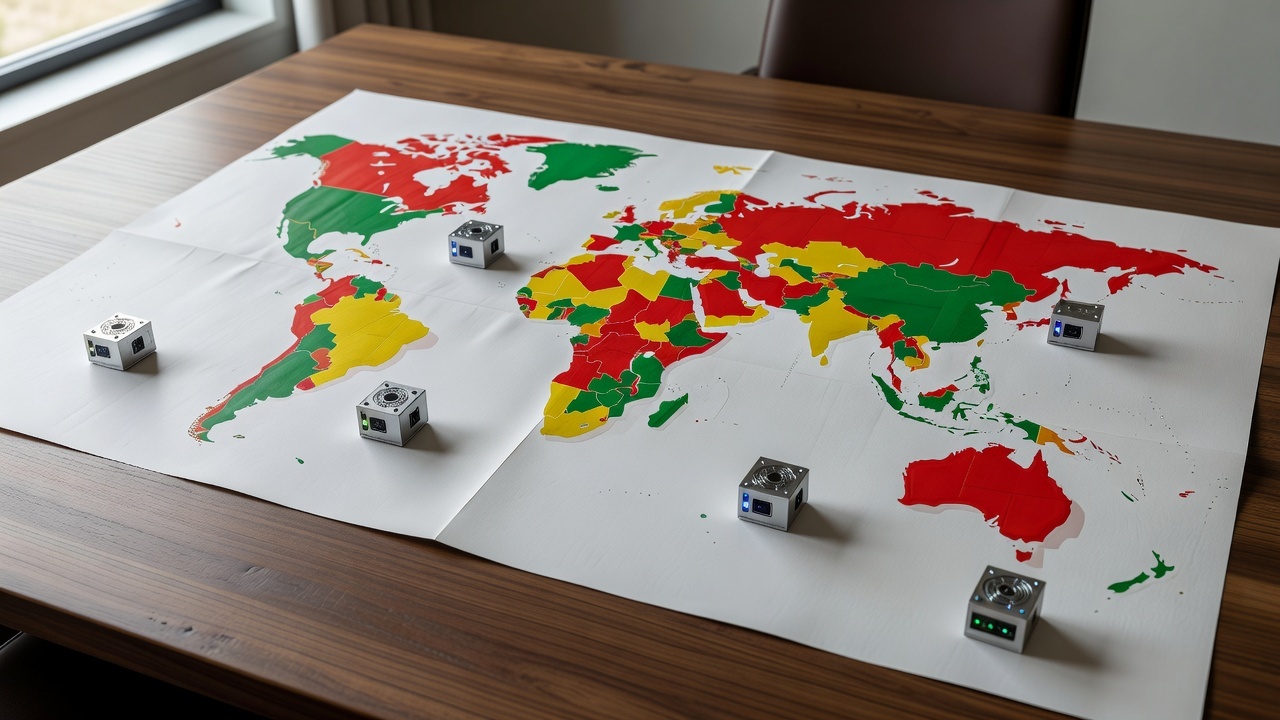
Anti-Mining Laws 2026: Where in the World Mining Has Been Banned or Restricted
Regulatory pressure on cryptocurrency mining has been building since 2021, when China carried out a sweeping ban. By July 2026, the picture has grown considerably more complex: some countries ban mining outright, others impose special taxes or energy-consumption restrictions, while others create favorable conditions to attract miners. Here is the current state of play across key jurisdictions.
China: Full Ban Since 2021
China banned cryptocurrency mining in September 2021. The ban covers all forms of cryptocurrency mining and remains the most sweeping in the world. Before 2021, China accounted for roughly 65-70% of global Bitcoin hashrate.
After the ban, much of the equipment was relocated to Kazakhstan, the US, Russia, and other countries. As of July 2026, the ban remains fully in force. Some miners continue operating illegally, but regulatory pressure stays high.
Russia: Regional Bans and Uncertainty
The situation in Russia remains ambiguous. In summer 2024, a law was passed legalizing mining at the federal level, while simultaneously allowing regional authorities to impose bans within their territories.
By July 2026, mining restrictions are in effect in several regions, including Moscow and the Moscow Oblast, Dagestan, Chechnya, Ingushetia, and several other power-deficit regions. In energy-surplus regions - Irkutsk Oblast, Krasnoyarsk Krai, Karelia - mining continues to operate. The restrictions mainly affect residential miners: we covered this in our article on Moscow's ban.
USA: Patchwork Regulation State by State
There is no federal ban on mining in the US, but regulation varies significantly from state to state. Between 2023 and 2026, several states introduced restrictions:
- New York - imposed a two-year moratorium on new mining operations using coal-based generation in 2022, extended in 2024. A requirement to use 100% renewable energy effectively limits industry expansion
- Kentucky, Texas, Wyoming - mining-friendly states with favorable tariffs and minimal regulation
- Federal level - in 2025, Congress passed the 'Mine American Bitcoin' act, removing several environmental restrictions for the mining industry
European Union: Environmental Pressure Without Direct Bans
The EU has not imposed a direct ban on cryptocurrency mining, but regulatory pressure is substantial. In 2022-2023, a ban on Proof-of-Work mining was debated as part of the MiCA regulation, but it did not make it into the final text.
By 2026, the main restriction tool has become energy standards: requirements to disclose carbon footprint, inclusion of crypto assets in the emissions trading system. Norway eliminated preferential electricity tariffs for miners. Kosovo banned mining in 2022 during an energy crisis - the ban was later lifted.
Friendly Jurisdictions: Where Mining Is Moving
Against the backdrop of restrictions, mining is actively shifting to countries with cheap energy and lenient regulation:
- Kazakhstan - absorbed much of the hashrate after China's ban, then introduced its own restrictions due to grid overload. By 2026 the situation has stabilized
- UAE - actively attracting mining companies, especially in free economic zones. Zero corporate income tax
- Ethiopia, Kenya - cheap hydropower and no specific mining regulation attract large-scale operators
- Iceland, Norway - cheap geothermal and hydropower, stable climate for cooling, though Norway has eliminated preferential tariffs

What This Means for Miners
The regulatory landscape continues to shift. A few practical takeaways:
- Legal status matters more than taxes. Operating in a jurisdiction with a clear legal framework for mining beats saving on taxes in a gray zone
- Regional bans in Russia are real. If you are in a restricted region, verify current status through local regulatory sources
- Energy policy matters long-term. Countries with cheap renewable energy and low regulatory burden will remain attractive for mining regardless of short-term conditions
Compare mining profitability under different conditions using POOL BTC's calculator. For how mining pools are responding to regulatory changes, see our major pool overview.
Frequently Asked Questions
Could bans spread to most countries?
This is unlikely in the near term. Countries compete for hashrate as a source of tax revenue and electricity consumption. A total ban would be an outlier position - most governments prefer regulation over prohibition.
What happens to equipment when a ban is introduced?
Historically, miners have managed to relocate equipment before bans took effect - as happened after China's 2021 ban. Equipment is portable, and the global secondary ASIC market functions well.
Do bans affect the Bitcoin price?
Short-term - yes, ban news causes volatility. Long-term, hashrate recovers in new jurisdictions and the network keeps running. After China's 2021 ban, hashrate reached new all-time highs within a year.