
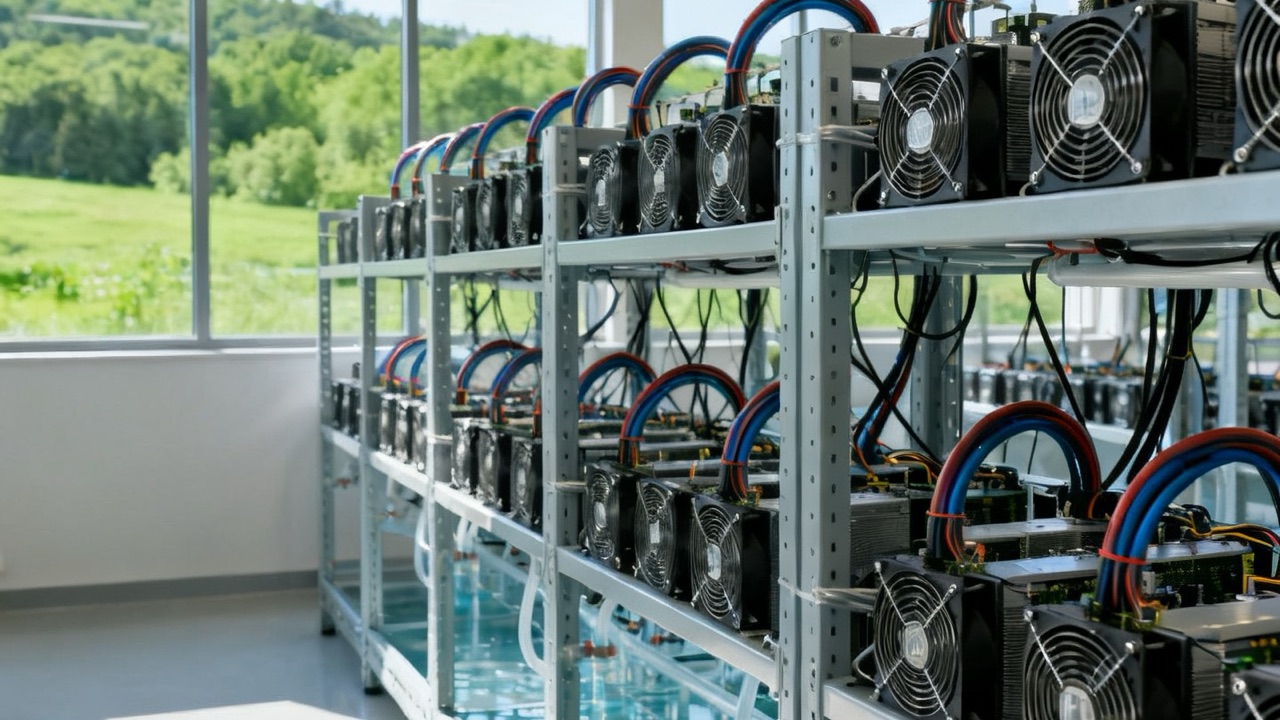
Best mining pool for Antminer S21 Pro and S21 Hyd
Last updated: 2026-09-29
The S21 Pro (234 TH/s, 15 W/TH) and S21 Hyd (335 TH/s, 16 W/TH) both earn more gross BTC per day than the base S21, so the fee gap between pools is worth more in absolute dollars. Tpool (0.9% FPPS) and Trustpool (1% PPS+) give you the most of that revenue. The Hyd's higher hashrate also clears payout thresholds faster, which matters at pools like AntPool (0.005 BTC) or Foundry USA (0.01 BTC). If your hydro setup runs near 100% uptime, PPLNS at 2% (ViaBTC, F2Pool) becomes more attractive than it would be for air-cooled units with thermal throttling.
POOL BTC is not a mining pool. We compare pools using public data and cite a source for every number. Fees and thresholds below were checked against official pool documentation on 2026-08-18 (Tpool on 2026-09-09). Terms change, so confirm on the pool's site before you point hashrate at it.
What are the S21 Pro and S21 Hyd specs for pool math?
The POOL BTC ASIC table lists three S21 variants plus the S21 XP. The S21 Pro (234T) hashes at 234 TH/s with 15 W/TH efficiency, the best in the lineup. The S21 Hyd (335T) pushes 335 TH/s at 16 W/TH using liquid cooling. The base S21 (200T) sits at 200 TH/s and 17.5 W/TH. All figures below use nameplate specs; real numbers shift with firmware and ambient conditions.
| Model | Hashrate | Efficiency | Power (calc.) | kWh/day |
|---|---|---|---|---|
| Antminer S21 (200T) | 200 TH/s | 17.5 W/TH | 3,500 W | 84 |
| Antminer S21 Pro (234T) | 234 TH/s | 15 W/TH | 3,510 W | 84.2 |
| Antminer S21 Hyd (335T) | 335 TH/s | 16 W/TH | 5,360 W | 128.6 |
| Antminer S21 XP | 270 TH/s | 13.5 W/TH | 3,645 W | 87.5 |
S21 XP specs: 270 TH/s, 3645 W, 13.5 J/TH (Bitmain support page, checked 28.09.2026). Full model list: miner ranking.
Why does the S21 Pro's 15 W/TH efficiency change pool math?
The S21 Pro draws roughly the same power as the base S21 (both around 3.5 kW) but hashes 17% faster. That means electricity eats a smaller share of gross revenue, so the pool fee becomes a bigger proportion of the costs you can actually control. On a Pro, a 3.1 percentage-point fee gap (Tpool at 0.9% versus a 4% pool) is 17% larger in absolute BTC than on a base S21.
In formula terms: daily fee cost = hashrate x hashprice x fee. For a Pro at 234 TH/s, that gap is 234 x HP x 0.031. For a base S21 at 200 TH/s, it is 200 x HP x 0.031. The ratio is simply 234/200 = 1.17.
The Pro's lower W/TH also means it stays profitable deeper into a hashprice dip. When electricity is a smaller slice of revenue, you have more room before the break-even line, and the pool fee is the next lever to pull.
How does hydro cooling on the S21 Hyd affect pool choice?
Liquid cooling gives the S21 Hyd two things that matter for pool selection: higher sustained hashrate and better uptime. Air-cooled ASICs throttle in hot environments, losing maybe 5-10% of nameplate hashrate on summer days. A properly plumbed Hyd keeps its 335 TH/s around the clock.
That uptime stability has a direct pool implication. On PPLNS, you earn shares only while submitting them. If an air-cooled unit drops offline for an hour during a lucky block streak, you miss that window. The Hyd rarely has that problem. So the PPLNS discount (2% at ViaBTC and F2Pool versus their 4% FPPS rate) is less risky when the hardware runs flat.
Hydro setups also tend to be in facilities with redundant power and network, which further reduces the "offline during a lucky streak" risk that makes PPLNS unattractive for single-unit home miners.
One more thing: the Hyd draws 5.36 kW. If you are running a coolant loop and pumps, real power from the wall is higher. Factor that into your electricity line, not the pool line. The pool doesn't know or care about your cooling overhead.
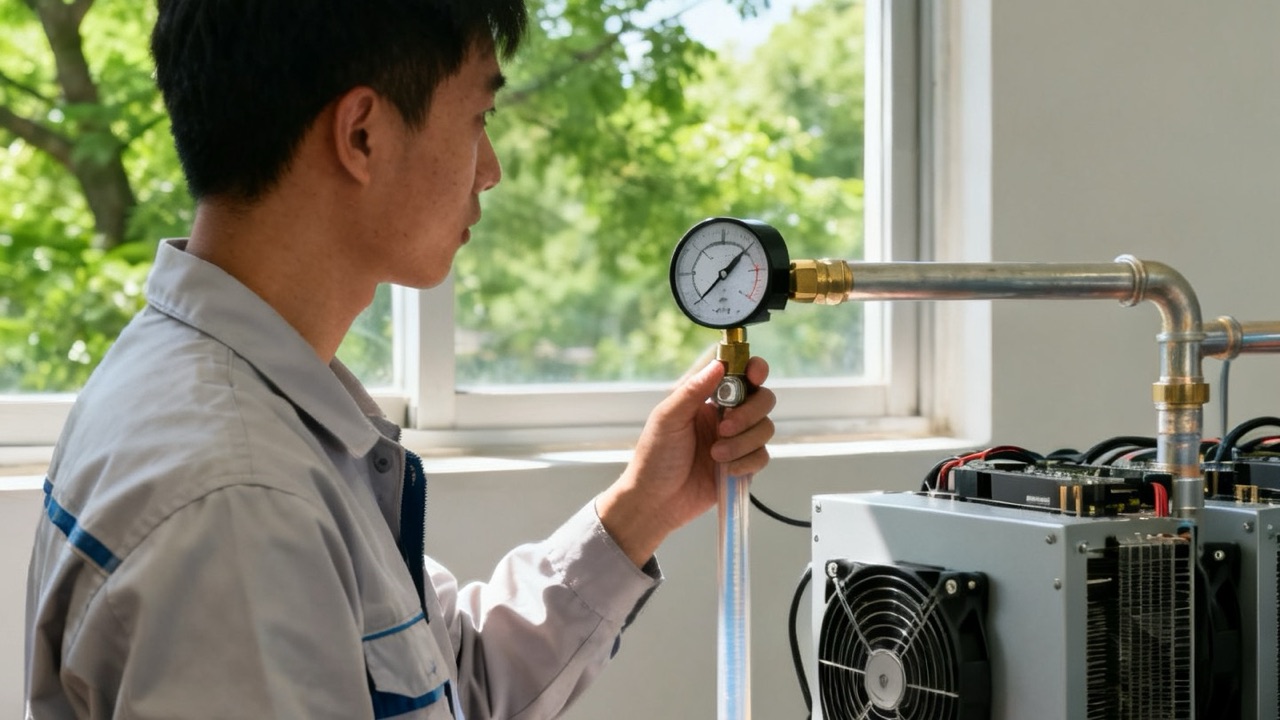
Which BTC pools work for S21 Pro / S21 Hyd, and what do they charge?
All three S21 variants are SHA-256, so the pool list is the same. What changes is how much the fee gap costs you and how fast you reach payout thresholds. As of 2026-08-18, POOL BTC data:
| Pool | Fee | Scheme | Min. payout | Verified |
|---|---|---|---|---|
| Tpool | 0.9% | FPPS | 0.0001 BTC | 2026-09-09 |
| Trustpool | 1% | PPS+ | 0.001 BTC | 2026-08-18 |
| NiceHash | 2% | RTPPS | 0.00001 BTC (internal wallet) | 2026-08-18 |
| Luxor | 2.5% | FPPS | 0.001 BTC | 2026-08-18 |
| Promminer | 3% | FPPS | 0.0001 BTC | 2026-08-18 |
| Kryptex Pool | 3% | PPS+ | 0.001 BTC | 2026-08-18 |
| AntPool | 4% | FPPS / PPS / PPLNS | 0.005 BTC | 2026-08-18 |
| ViaBTC | 4% (PPLNS 2%) | PPS+ / PPLNS | 0.001 BTC | 2026-08-18 |
| F2Pool | 4% (PPLNS 2%) | FPPS / PPLNS | 0.005 BTC | 2026-08-18 |
| Binance Pool | 4% | FPPS | none, daily credit to Funding Wallet | 2026-08-18 |
| EMCD | 4% | FPPS | 0.0001 BTC | 2026-08-18 |
| Foundry USA | not disclosed, tiered | FPPS | 0.01 BTC | 2026-08-18 |
| Neopool | not disclosed | FPPS | 0.001 BTC | 2026-08-18 |
Fee sources: AntPool (fees page), ViaBTC (pricing), F2Pool (support), Luxor (docs), Binance Pool (post), EMCD (help), Promminer (pool page), Tpool (site), Trustpool (site), Kryptex Pool (article), NiceHash (fees), Foundry USA (FAQ), Neopool (site).
Full live pool comparison: pool comparison page.
What does the fee gap cost on one S21 Pro vs one S21 Hyd?
The 3.1 percentage-point spread (0.9% vs 4%) scales linearly with hashrate. At hashprice $40.93/PH/day (Hashrate Index, 21.09.2026), HP per TH/day = $0.04093. At power rate $0.08/kWh:
| Model | Hashrate | Daily fee gap (0.9% vs 4%) | Elec. $/day | Gross $/day (at 0.9%) | Net $/day (at 0.9%) |
|---|---|---|---|---|---|
| S21 (200T) | 200 TH/s | $0.25 | $6.72 | $8.11 | +$1.39 |
| S21 Pro (234T) | 234 TH/s | $0.30 | $6.74 | $9.49 | +$2.75 |
| S21 Hyd (335T) | 335 TH/s | $0.43 | $10.29 | $13.59 | +$3.30 |
Formula: Gross = TH/s x $0.04093 x (1 - 0.009). Net = Gross - Elec. The Hyd's fee gap is 67.5% larger than the base S21's (335/200). Over a year, that $0.43/day difference adds up to ~$157.
Net revenue formula per day:
```
Net = TH/s x hashprice x (1 - pool fee) - kWh/day x power rate
```
Run your own numbers: profitability calculator.
Why the fee alone doesn't tell the full story: A 1% fee against a 4% fee.
How fast does each model reach payout thresholds?
Days to threshold = threshold / (hashrate x hashprice (BTC) x (1 - fee)). Using hashprice 0.00047652 BTC/PH/day (Hashrate Index, 21.09.2026) and 0.9% fee (Tpool):
BTC per TH/day = 0.00047652 / 1000 x 0.991 = 0.000000472 BTC.
| Threshold | S21 (200T) | S21 Pro (234T) | S21 Hyd (335T) |
|---|---|---|---|
| 0.0001 BTC | ~1 day | <1 day | <1 day |
| 0.001 BTC | ~11 days | ~9 days | ~6 days |
| 0.005 BTC | ~53 days | ~45 days | ~32 days |
| 0.01 BTC | ~106 days | ~91 days | ~63 days |
At pools with low thresholds (Tpool 0.0001 BTC, EMCD 0.0001 BTC), even a base S21 gets paid within hours. The threshold question only matters at AntPool, F2Pool, and Foundry USA. The Hyd's speed advantage is real but mostly relevant if you want your BTC off the pool fast.
Foundry USA note: on the last calendar day of each month, the threshold drops to 2,730 sats. Foundry also requires an application and KYC.
FPPS, PPS+, or PPLNS for an S21 Pro or S21 Hyd?
For a single Pro or Hyd running at home on regular power, FPPS is the simpler pick. Fixed payout per share, transaction fees included, steady income. PPS+ at Trustpool (1%) is similar but splits transaction fees as they come rather than baking them in.
Where PPLNS becomes interesting for the Hyd specifically: if you run it in a facility with redundant power and stable coolant, your uptime is close to 100%. PPLNS rewards consistent share submission. ViaBTC and F2Pool charge 2% on PPLNS vs 4% on FPPS, so the effective fee drops by half. Over months, that 2% savings on 335 TH/s of hashrate can outweigh PPLNS variance.
Quick decision guide:
- Single Hyd, pro facility, stable uptime: consider PPLNS at 2% (ViaBTC or F2Pool).
- Single Pro at home, normal power: FPPS at Tpool (0.9%) or Trustpool PPS+ (1%).
- Multiple units, any model: FPPS for predictable cash flow, PPLNS if your whole rack stays up.
More on payout schemes: FPPS vs PPLNS.

Does the S21 Hyd need special pool configuration?
No. From the pool's perspective, the Hyd is just another SHA-256 worker. You configure the same stratum URL, port, and worker name. The pool does not know or care that the ASIC uses liquid cooling.
What you should do on the infrastructure side:
- Set a backup stratum on a second pool. If your primary goes down, the Hyd keeps hashing instead of sitting idle (those 128.6 kWh per day of electricity keep running either way).
- Monitor coolant flow. If the cooling loop fails, the Hyd shuts down to protect itself. That is a total hashrate loss, not a throttle. Pool uptime monitors will flag it, but your facility should catch it first.
- Keep firmware current. Bitmain occasionally pushes updates that change the hashrate or efficiency numbers.
For worker and stratum setup, see how to connect an ASIC to a pool.
Summary: which pool for which S21 model?
| Situation | Recommended pool(s) | Why |
|---|---|---|
| S21 Pro, lowest fee priority | Tpool (0.9% FPPS) | Lowest fee, low threshold |
| S21 Hyd, pro facility, high uptime | ViaBTC or F2Pool PPLNS (2%) | Half the fee if uptime is consistent |
| S21 Hyd, home setup or variable uptime | Tpool (0.9% FPPS) or Trustpool (1% PPS+) | Predictable income, low threshold |
| Any S21 model, want analytics | Luxor (2.5% FPPS) | Dashboards and data tools |
| Any S21 model, need exchange integration | Binance Pool (4% FPPS) | Direct credit to Binance wallet |
Before you connect:
- Check the fee on the pool's site (links in the table above).
- Confirm which payout scheme your account defaults to.
- Check the payout threshold and withdrawal network.
- Run your own numbers in the calculator.
- Set a backup stratum on a second pool.
FAQ
Which pool is cheapest for an Antminer S21 Pro?
As of 2026-09-09, Tpool charges 0.9% on FPPS. Trustpool is next at 1% on PPS+ (verified 2026-08-18). Always confirm on the pool's own site before connecting.
Does the S21 Hyd need a different pool than the air-cooled S21?
No. The pool sees a SHA-256 worker regardless of cooling type. The difference is on your side: the Hyd's higher uptime makes PPLNS (2% at ViaBTC or F2Pool) a more viable option than it is for air-cooled units that throttle in heat.
How much does an S21 Hyd earn per day?
Gross daily revenue at hashprice $40.93/PH/day (Hashrate Index, 21.09.2026): 335 TH/s x $0.04093 = $13.71 before pool fee and electricity. Use the calculator with your power rate and cooling overhead.
Is PPLNS too risky for one S21 Hyd?
PPLNS varies week to week. Over a few months it averages out, and the 2% fee (vs 4% FPPS at the same pool) adds up. If you can handle short-term swings and your uptime is solid, the math favors PPLNS on a Hyd.
Should I use AntPool since Bitmain makes the S21?
AntPool charges 4% on FPPS and has a 0.005 BTC payout threshold. The hardware manufacturer doesn't give you a fee discount. Compare AntPool against lower-fee options using the same formula.
How much power does the S21 Hyd really draw with the cooling loop?
Bitmain specs say 5,360 W for the ASIC itself. Pumps, radiators, and fans for the coolant loop add to that. Measure at the wall or check your facility's per-rack metering. The pool fee calculation uses only the ASIC's hashrate, not your total power draw.
This article contains referral links to mining pools (marked as sponsored). We may receive a reward if you register through them. This does not change the figures or the order of rows in the tables: the terms are taken from the pools' official pages.