
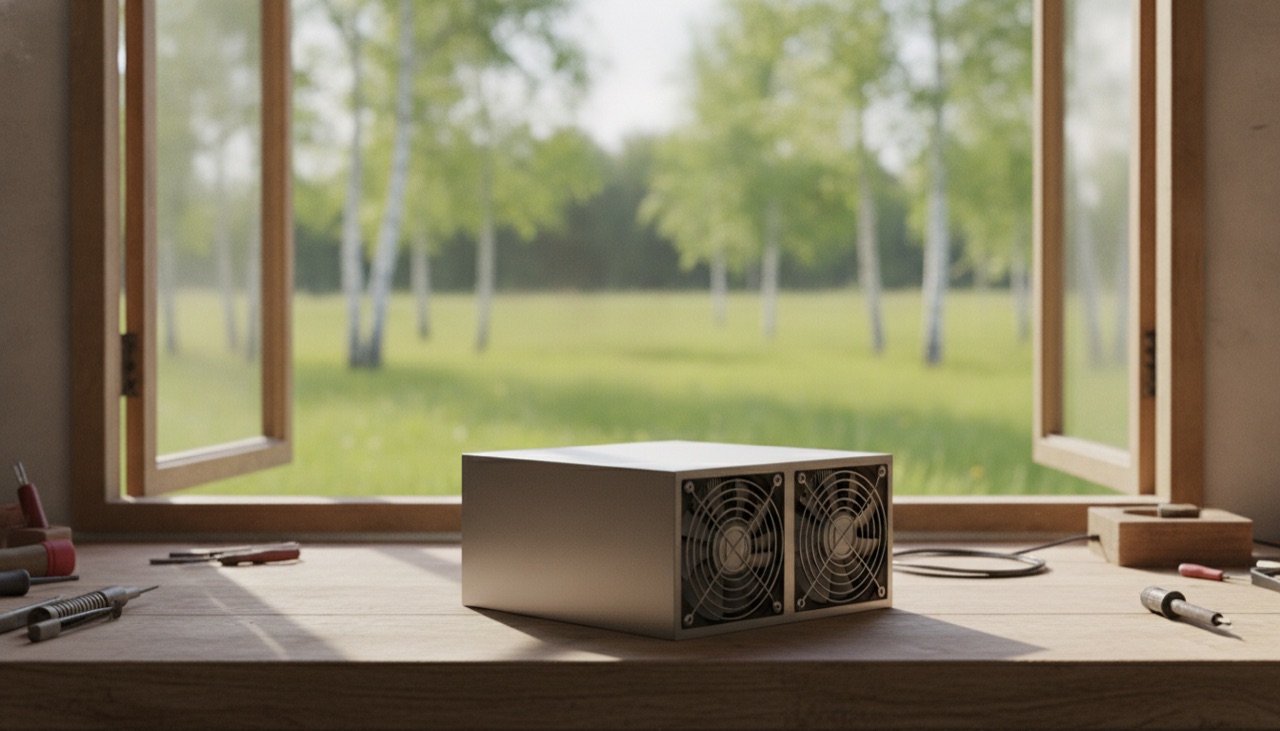
How to mine Kaspa (KAS) in 2026: hardware, income math, pools and setup
To mine Kaspa in 2026 you need a kHeavyHash ASIC, a KAS wallet address and a pool. GPUs no longer pay. At the network numbers for 2026-10-01, a 21 TH/s Antminer KS5 Pro makes about 119 KAS a day, roughly $5.08, and stays in profit only below about $0.067 per kWh. A 40 TH/s KS7 holds up to about $0.13.
POOL BTC is an independent comparison site. We are not a pool, we sell no hardware and we do not forecast the price of KAS. Every number below comes with its source and date, and the income math is shown step by step so you can redo it with your own tariff. This is not financial advice.
How does Kaspa mining work in 2026?
Kaspa is a proof of work network that builds a block DAG rather than a single chain, so parallel blocks are kept instead of being thrown away. Since the Crescendo hard fork on 5 May 2025 it produces 10 blocks per second. Miners hash with the kHeavyHash algorithm, and in practice only dedicated ASICs earn more than their power bill.
The jump from one to ten blocks per second did not change how many coins come out. The reward per block was cut by the same factor of ten, so emission per second stayed where it was, as described in the Crescendo overview on Kasmedia. For a miner the practical effect is smoother income: a pool finds many small blocks instead of a few large ones.
Total network hashrate on 2026-10-01 was 333,023 TH/s, or about 333 PH/s, according to the public node API at api.kaspa.org. Network difficulty at the same moment was 1.666 x 10^16 per api.kaspa.org/info/blockdag. Your share of that hashrate is your share of the coins, minus pool fees.
What is the Kaspa block reward and how does it shrink?
On 2026-10-01 the reward was 2.18267645 KAS per block. It falls every month, not every four years: each step multiplies the reward by the twelfth root of one half, about 0.9439, so it halves once a year in twelve small steps. The next step, to 2.06017223 KAS, is due on 2026-10-05.
Both values come from the node API: the current reward from api.kaspa.org/info/blockreward and the next one with its date from api.kaspa.org/info/halving. We divided the second by the first and got 0.94387, which matches (1/2)^(1/12) to five decimal places. At 10 blocks per second the network issues about 1,885,832 KAS a day before fees, and that figure drops roughly 5.6% every month.
Supply matters for the same reason. The API reports a maximum supply of 28,704,035,605 KAS and a circulating supply of about 27,731,984,362 KAS on 2026-10-01, so roughly 96.6% of all coins already exist. What is left trickles out more slowly every month.
This schedule is the main thing that separates KAS from bitcoin for a miner. With BTC you plan around a halving every four years. With KAS your coin output per terahash falls a little every month even if network hashrate stays flat, so a plan that only works at today's numbers will not work in six months.
Which ASIC miners can mine Kaspa?
Bitmain's KS series is the most widely sold kHeavyHash line, with IceRiver and Goldshell models also in use. What decides profit is efficiency in joules per terahash, not raw hashrate. The KS7 at 77 J/TH uses about half the energy per terahash of the KS5 and KS5 Pro, and the old KS3 burns almost five times as much.
| Model | Hashrate | Power at the wall | Efficiency | Source, checked 2026-10-01 |
|---|---|---|---|---|
| Antminer KS3 | 9.4 TH/s | 3,500 W | 372 J/TH (our division) | Bitmain KS3 specifications |
| Antminer KS5 | 20 TH/s | 3,000 W | 150 J/TH | Bitmain KS5 specifications |
| Antminer KS5 Pro | 21 TH/s | 3,150 W | 150 J/TH | Bitmain KS5 Pro specifications |
| Antminer KS7 | 40 TH/s | 3,080 W | 77 J/TH | Bitmain shop, KAS miners |
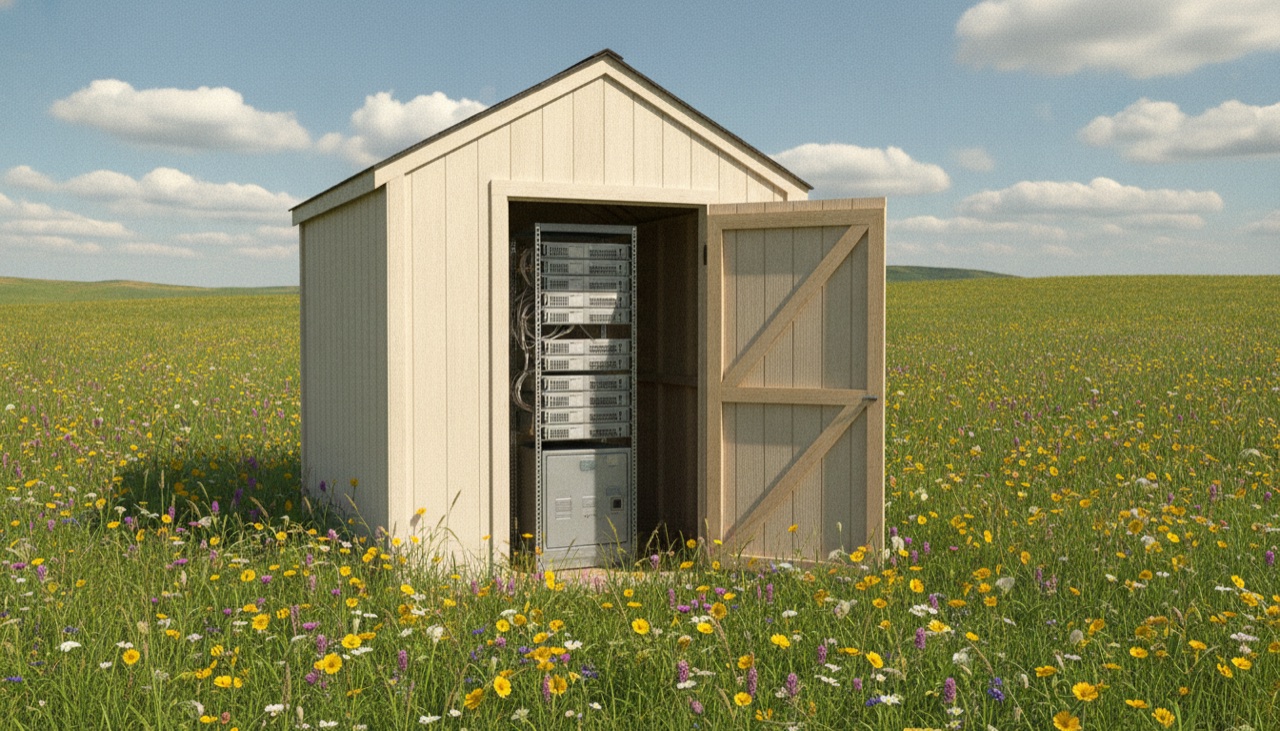
Bitmain gives a tolerance on these figures: plus or minus 3% for hashrate and plus or minus 5% for power on the KS5 page. The KS5 and KS5 Pro run on 220 to 277 V AC, so a 230 V circuit is enough electrically, but noise is another matter. The KS5 Pro is rated at 76 dBA, close to a vacuum cleaner, which is why most people put these machines in a garage, a shed or a hosting facility rather than a flat.
On a GPU the picture is simple. A graphics card now produces so little hashrate next to a 20 TH/s machine that its share of the 1.9 million daily KAS rounds to almost nothing. If you already own GPUs, check other coins in our calculator first.
How much does one Kaspa ASIC earn per day?
At the network hashrate and price for 2026-10-01, a 21 TH/s KS5 Pro mines about 118.9 KAS a day, worth about $5.08 before pool fees. It draws 75.6 kWh, so it nets about $1.30 at $0.05 per kWh and loses money at $0.08. The 40 TH/s KS7 still nets about $0.80 a day at $0.12.
Here is the formula we used, so you can replace any input with your own:
KAS per day = your hashrate / network hashrate x blocks per day x block reward
For the KS5 Pro that is 21 / 333,023 x 864,000 x 2.18267645 = 118.92 KAS. Blocks per day are 10 x 86,400 = 864,000. The KAS price was $0.04270936 at the moment we pulled it from api.kaspa.org/info/price on 2026-10-01. Treat that price as a snapshot, because KAS moves by several percent in a day. The electricity tariffs of $0.05, $0.08 and $0.12 per kWh are our own assumptions, picked to show a cheap, a middling and an expensive rate.
| Model | KAS per day | Revenue per day | Power per day | Net at $0.05 | Net at $0.08 | Net at $0.12 | Breakeven tariff |
|---|---|---|---|---|---|---|---|
| Antminer KS3 | 53.23 | $2.27 | 84.00 kWh | -$1.93 | -$4.45 | -$7.81 | $0.027 |
| Antminer KS5 | 113.26 | $4.84 | 72.00 kWh | $1.24 | -$0.92 | -$3.80 | $0.067 |
| Antminer KS5 Pro | 118.92 | $5.08 | 75.60 kWh | $1.30 | -$0.97 | -$3.99 | $0.067 |
| Antminer KS7 | 226.51 | $9.67 | 73.92 kWh | $5.98 | $3.76 | $0.80 | $0.131 |
These figures are gross of pool fees. Take off 0.9% to 1% for the pools listed below, and the result moves by a few cents a day. The table also ignores transaction fees in blocks, the cost of the machine, cooling and downtime. Two things will push every row down from here: the monthly reward cut and any growth in network hashrate. Run your own numbers in the POOL BTC calculator, picking KAS in the coin selector, before you buy anything.
Which pools support Kaspa mining?
Among the pools we track, 2Miners, WoolyPooly, HeroMiners and Kryptex Pool publish Kaspa terms openly. Fees run from 0.9% to 1%, and minimum payouts from 1 KAS at HeroMiners to 50 KAS at 2Miners and WoolyPooly. Trustpool also lists KAS at 1% with PPS+ (the pool's coin table, 2026-10-01), but does not state a minimum payout. AntPool and F2Pool also list KAS, but their KAS fee was not shown on the public pages we checked.
| Pool | Fee | Scheme | Minimum payout | Source, checked 2026-10-01 |
|---|---|---|---|---|
| 2Miners | 1% | PPLNS | 50 KAS, payouts every 2 hours | 2miners.com/kas-mining-pool |
| WoolyPooly | 0.9% | PPLNS or SOLO | 50 KAS | woolypooly.com/en/coin/kas |
| HeroMiners | 0.9% | PROP, SOLO available | 1 KAS, payout run every hour | kaspa.herominers.com |
| Kryptex Pool | 1% | PPS+ or SOLO | 10 KAS | pool.kryptex.com/kas |
| AntPool | not stated on the public page | not stated | not stated | antpool.com |
| F2Pool | not stated on the public page | not stated | not stated | f2pool.com/coin/kaspa |
| Trustpool | 1% | PPS+ | not stated on the pool site | trustpool.cc |
The scheme matters more than a tenth of a percent of fee. With PPS+ the pool pays for every accepted share, so income is steady but the pool carries the variance. With PPLNS and PROP you get paid only when the pool finds blocks. At ten blocks per second a large pool finds blocks constantly, so the difference in variance is small for KAS. Kryptex can also convert KAS earnings to BTC or USDT, according to its pool page.
How do you set up an ASIC to mine Kaspa?
Setup takes about fifteen minutes: create a KAS wallet, connect the miner to your network, open its web panel by IP address and enter the pool's stratum address, your wallet as the worker name, and a password. Then confirm the pool dashboard shows your hashrate. The steps below use stratum addresses copied from each pool's own page on 2026-10-01.
- Create a Kaspa wallet and copy the receiving address. It starts with "kaspa:". Do not use an exchange deposit address unless the exchange explicitly allows mining payouts to it.
- Plug the miner into a 220 to 277 V circuit rated for at least 20 A and connect it to your router with an Ethernet cable. The KS5 and KS5 Pro need the full 20 A per Bitmain's specifications.
- Find the miner's IP address in your router's list of connected devices and open it in a browser. Log in with the default credentials from the manual and change them right away.
- Open the Miner Configuration page and enter the pool URL. Examples from the pools' sites: 2Miners uses stratum+tcp://kas.2miners.com:2020, WoolyPooly uses pool.woolypooly.com:3112, Kryptex uses kas.kryptex.network:7011 (with regional servers such as kas-eu.kryptex.network:7011), and HeroMiners lists port 1210 on de.kaspa.herominers.com for Bitmain KS3, KS5 and KS5 Pro.
- In the worker field enter your wallet address, a dot and a rig name, for example kaspa:yourAddress.ks5pro01. Most pools accept any password, such as x.
- Add a second pool from a different region as backup, then save and let the miner restart.
- Wait 15 to 30 minutes and look up your wallet address on the pool's site. Reported hashrate should be close to the rated figure, and rejected shares should be low.
After the first day, compare what the pool credited with the table above. A large gap usually points to a weak connection, a hot room or a wrong port for your model.
When does Kaspa mining stop making sense?
It stops when daily revenue no longer covers the power bill, which for a 150 J/TH machine meant a tariff above about $0.067 per kWh on 2026-10-01. Because the reward shrinks every month, that line keeps moving down even with a flat KAS price, so the margin you start with is the most you are likely to get.
A rough check: with the price and hashrate unchanged, the monthly reward step cuts revenue by about 5.6%, and twelve steps cut it in half. A KS5 Pro earning $5.08 today would earn about $2.54 a year from now under those assumptions, so at $0.05 per kWh it would already be losing about $1.24 a day. Only a higher KAS price or falling network hashrate could offset that, and we do not predict either. Watch the breakeven tariff, not the revenue figure.
Legal status is the other limit. Check the rules for your country and region before you plug anything in. If you mine in Russia, our overview of Russian mining law covers the registry, taxes and regional bans.
FAQ
Can I still mine Kaspa with a graphics card?
Technically yes, but a GPU earns next to nothing now that kHeavyHash ASICs dominate the network. Network hashrate was about 333 PH/s on 2026-10-01, so a card's share of daily emission rounds to a fraction of a KAS. It will not cover its own electricity at any of the three tariffs we used.
How often does the Kaspa block reward drop?
Every month. Each step multiplies the reward by about 0.9439, the twelfth root of one half, so the reward halves once a year in twelve steps. The reward was 2.18267645 KAS on 2026-10-01 and is due to fall to 2.06017223 KAS on 2026-10-05, per api.kaspa.org.
How many blocks does Kaspa produce per day?
About 864,000. Since the Crescendo hard fork on 5 May 2025 the network targets 10 blocks per second, which is 10 x 86,400 seconds. The per block reward was divided by ten at the same time, so the number of KAS issued per second did not change.
What is the minimum payout on Kaspa pools?
It depends on the pool. On 2026-10-01 HeroMiners paid from 1 KAS, Kryptex Pool from 10 KAS, and 2Miners and WoolyPooly from 50 KAS. A KS5 Pro mines about 119 KAS a day at current numbers, so any of these thresholds is reached within a day.
Is the Antminer KS7 worth more than the KS5 Pro?
Per kilowatt hour, yes. The KS7 is rated at 77 J/TH against 150 J/TH for the KS5 Pro, so it produces about twice the KAS for the same power. On 2026-10-01 that put its breakeven tariff near $0.131 per kWh against $0.067. Whether it pays back depends on the price you pay for it.
Is Kaspa mining profitable in 2026?
Only with cheap power and an efficient machine. At 2026-10-01 numbers, a 150 J/TH ASIC needed a tariff below about $0.067 per kWh, and a 77 J/TH ASIC below about $0.131, before hardware cost. The monthly reward cut lowers both thresholds over time. Recalculate with today's price before you decide.
This article contains referral links to mining pools (marked as sponsored). We may receive a reward if you register through them. This does not change the figures or the order of rows in the tables: the terms are taken from the pools' official pages.