

Bitcoin difficulty expected to fall 5 to 7% around 13 November, hashprice at 31.89 USD
Bitcoin mining difficulty is expected to drop by roughly 5 to 7% around 2026-11-13, according to estimates published between 2026-11-08 and 2026-11-10. For a home miner that means a few percent more coins per TH, but hashprice sits at 31.89 USD per PH per day, so only efficient machines on cheap electricity stay in profit.
What is bitcoin difficulty and why does it change every 2016 blocks?
Difficulty is the number that sets how hard it is to find a valid block. The network recalculates it every 2016 blocks, which at the 10-minute target is about two weeks. When miners switch machines off and blocks slow down, difficulty falls. When hashrate grows, it rises.
The current period ends at block 975,744. Nobody votes on the change and nobody can postpone it: the protocol reads how long the last 2016 blocks took and scales the target to match. That is why an estimate is possible days in advance and why it keeps shifting until the last block of the period arrives.
What does the difficulty estimate say right now?
Estimates from 2026-11-08 to 2026-11-10 point to a cut of about 4.7 to 6.7%, with the newest ones close to 6%. On 2026-11-10 the mempool.space estimate was -6.74% with 493 blocks left, and the retarget was expected around 2026-11-13.
| Source | Estimate date | Expected change |
|---|---|---|
| mempool.space | 2026-11-10 | -6.74% (493 blocks left) |
| 24/7 Wall St | 2026-11-09 | -6.4% |
| Firsthand | 2026-11-09 | -6.28% |
| ING Mining | 2026-11-08 | -4.69% |
| Basecamp | 2026-11-06 | about -3% |
| WooFun | earlier, no date given | about -4% |
The spread comes from different publication hours and different hashrate windows. Readings of current hashrate range from 903 EH/s on a 3-day window to 995 EH/s, and 979 EH/s on a 7-day average. Hashrate Index also reported an average block time of 10m41s, slower than the 10-minute target. Slow blocks are the reason the estimate is negative.
This is an estimate, not a result, and it moves with every block found. Before you plan around it, check the live number on mempool.space and on our difficulty page. This article went live on 2026-11-12, before the adjustment.
How did October go for miners?
October pushed miners from both sides. Luxor's October report says difficulty rose 11.76%, from 132.76T to 148.36T, the largest monthly rise since February 2024. Hashprice fell 17.9%, from 40.15 to 32.98 USD, while bitcoin moved from 84,049 to 77,332 USD over the month.
Two adjustments sit behind that rise: about +5.5% on 2026-10-16 and +5.54% on 2026-10-29. After the second one, difficulty stood at 148.36T. More difficulty means each machine finds fewer blocks. A lower bitcoin price means each block pays less in dollars. Both hit income at once, which is how hashprice lost almost a fifth in a month.
The coming cut is the network adjusting to that squeeze. Hashrate Index shows the 7-day average hashrate falling from 1,062 to 979 EH/s, so some machines have already gone off.
What is hashprice now?
Hashprice is the daily revenue of one PH/s of hashrate, measured in USD. Hashrate Index put it at 31.89 USD per PH per day on 2026-11-09, below its 30-day average of 35.73. In per-TH terms that is about 0.032 USD per TH per day, before any electricity cost.
That figure is gross. Every machine has to cover its power bill out of those three cents. This is the number that decides who stays online: when it falls, the least efficient machines and the most expensive electricity drop out first. Our ASIC ranking compares models, so you can see where yours stands.
Which ASICs still break even, and at what power price?
At today's income only the most efficient generation holds up. The ING Mining margin report of 2026-11-08, with bitcoin at 75,903 USD and network hashrate at 995 EH/s, gives these break-even power prices: S21 Pro 9.6 cents per kWh, S19 XP 6.7, S19k Pro 6.3, S19 4.2.
| Model | Break-even power price | Profitable at 8 cents per kWh? |
|---|---|---|
| Antminer S21 Pro | 9.6 c/kWh | Yes |
| Antminer S19 XP | 6.7 c/kWh | No |
| Antminer S19k Pro | 6.3 c/kWh | No |
| Antminer S19 | 4.2 c/kWh | No |
At 8 cents, the report says, only the S21 Pro makes money. If your electricity costs 10 cents, even that machine is underwater. If it costs 5, the S19 XP and S19k Pro still work, and a plain S19 does not.
Break-even is the price at which revenue equals the power bill. The margins above come from one report with its own assumptions, so treat them as a guide and recount with your own tariff. These are farm-class machines. Small home units such as Bitaxe were not in that report; our guide to quiet ASICs for home covers them and is honest that they are a hobby, not income.
What does a difficulty cut change for a miner in coins per TH?
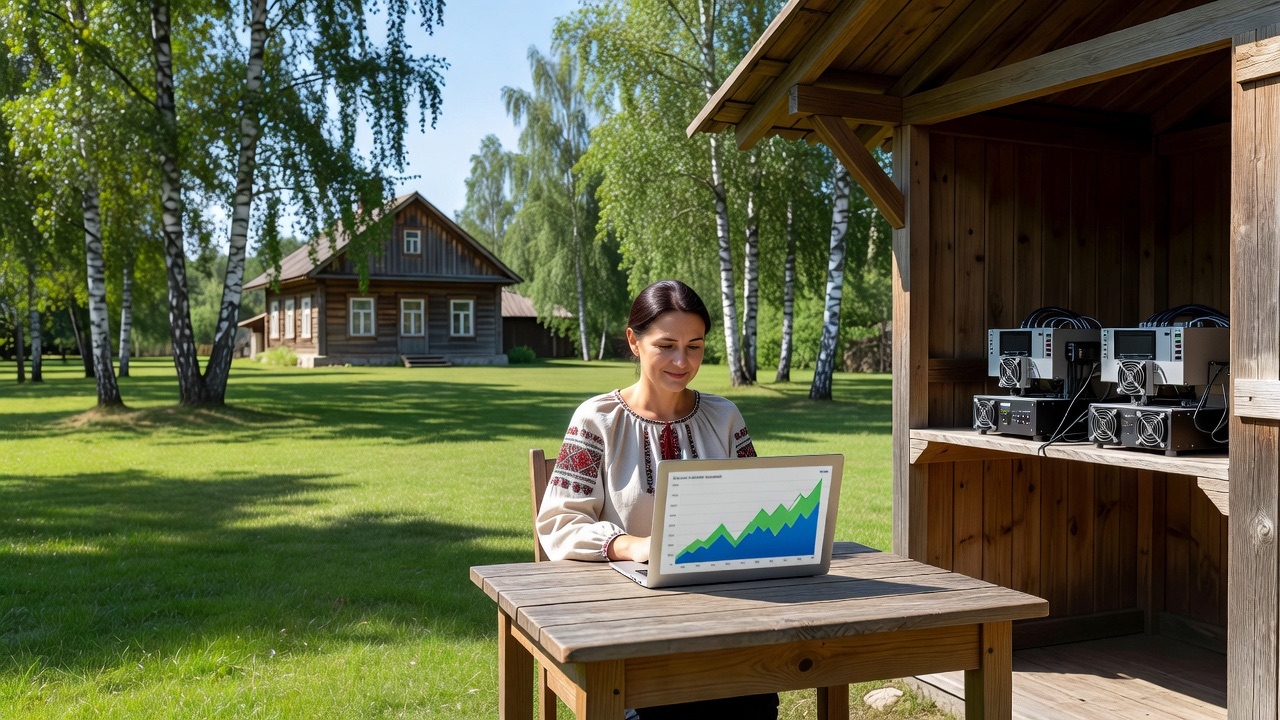
Each TH/s finds a larger share of blocks after a cut. By our arithmetic, a 4.7 to 6.7% cut lifts expected coins per TH by about 4.9 to 7.2%, everything else equal. In dollars that depends on the bitcoin price, which a difficulty change does not touch.
The math is simple: if difficulty drops by 6.74%, the same hashrate needs 6.74% fewer hashes per block, so it earns 1 / (1 - 0.0674), about 7.2% more. Apply that to the 31.89 USD hashprice and, with the same bitcoin price and the same network hashrate, you get roughly 34.2 USD per PH per day. This is arithmetic, not a forecast.
The gain has limits. If miners who switched off come back after the cut, hashrate rises and the next adjustment goes up again. A cut also does not change your power cost. A machine that loses money at 31.89 USD per PH per day is a bit closer to even at 34.2, and may still sit below the line.
Does Binance Pool's closure explain the drop?
No. Binance Pool found 1 of 919 blocks in the week cited by 24/7 Wall St, about 0.1%, so its shutdown is too small to move the whole network's hashrate enough to cut difficulty by around 6%. Where its hashrate went is not confirmed.
The pool stopped on 2026-11-10 at 07:00 UTC after an announcement on 2026-10-13. We covered the closure and the concentration among the biggest pools in a separate article. If you were mining there, the point for this article is narrow: a miner's profit depends less on the pool name than on fees and power price, and both are easy to compare.
What should a home miner do before the adjustment?
Start with your electricity price, because it decides everything else. Then run your model through the calculator with current numbers and compare pool fees on the pools page. A 6% cut will not save a machine whose power price is far above its break-even.
A short routine for the next days:
- Write down your price per kWh, including night and day rates if you have them.
- Find your model in the table above or in the ASIC ranking and compare its break-even with your price.
- Open the difficulty page on 2026-11-13 and check the actual change instead of trusting any estimate, including this one.
- Compare pool fees and payout terms before you move hashrate anywhere.
- If your price is above break-even, think about pausing, hosting or a more efficient machine rather than waiting for the next cut.
Nobody can say where hashprice goes next, and this article does not try to.

FAQ
When will bitcoin difficulty change?
The retarget is expected around 2026-11-13, at block 975,744. The exact time depends on how fast blocks arrive until then, so check the live countdown on mempool.space or on our difficulty page.
How big will the cut be?
Estimates between 2026-11-08 and 2026-11-10 range from -4.69% to -6.74%. The mempool.space estimate on 2026-11-10 was -6.74%. The final number will differ, because it is set by the blocks still to come.
Will my mining income go up after a difficulty cut?
Expected coins per TH rise by about 5 to 7% by our arithmetic, but dollar income also depends on the bitcoin price. If miners return and hashrate grows, the next adjustment can take the gain back.
Which ASICs are profitable at 8 cents per kWh?
In the ING Mining margin report of 2026-11-08, only the Antminer S21 Pro was profitable at 8 cents. Break-even for the S19 XP was 6.7 cents, for the S19k Pro 6.3 and for the S19 4.2.
Where can I check the live difficulty estimate?
On mempool.space and on our difficulty page. Both update as blocks arrive, so the number changes until the adjustment happens.
Independent comparison site. We do not sell miners or take payment for model mentions. Not investment advice.