
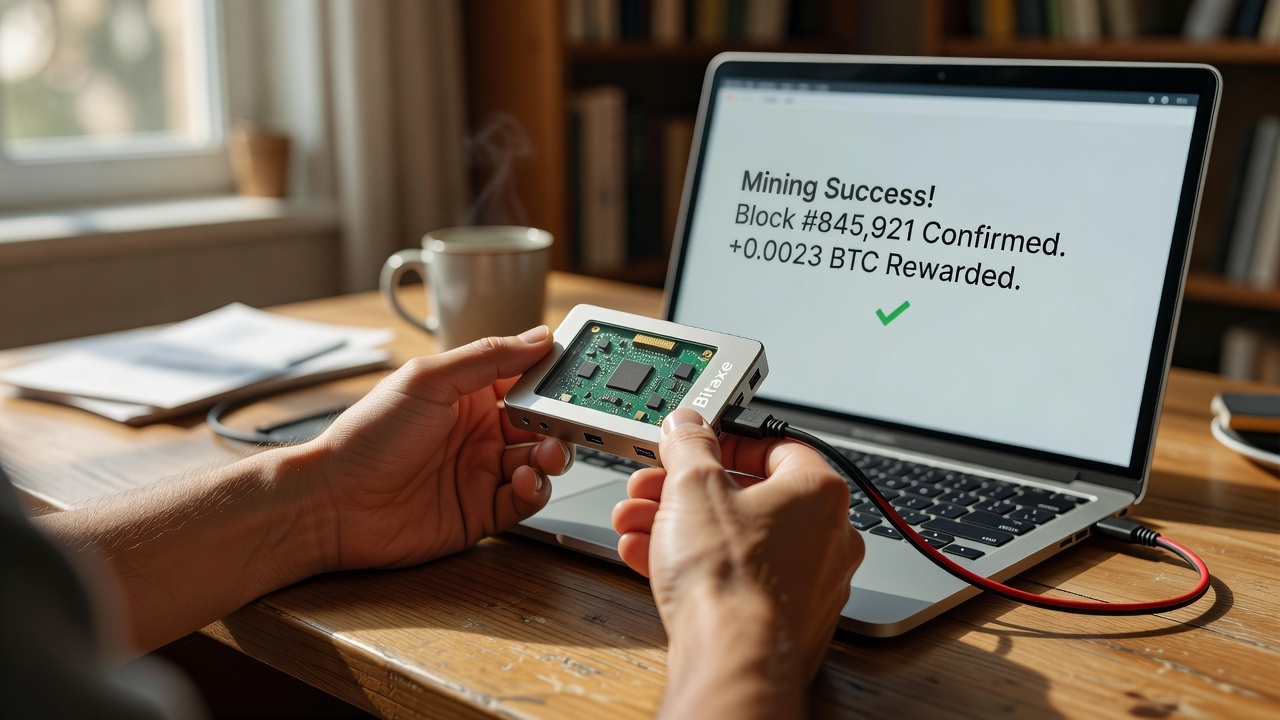
Solo Miner Wins $200,000 With $150 Bitaxe Device
On July 14, 2026, news broke of a rare solo mining success: the owner of a compact Bitaxe device unexpectedly found Bitcoin block 957,382, earning a reward of 3.1382 BTC, worth about $200,000 at the time. The odds of such a find via Public Pool with a Bitaxe Gamma device were estimated at roughly 1 in 6.5 million.
What Bitaxe Is
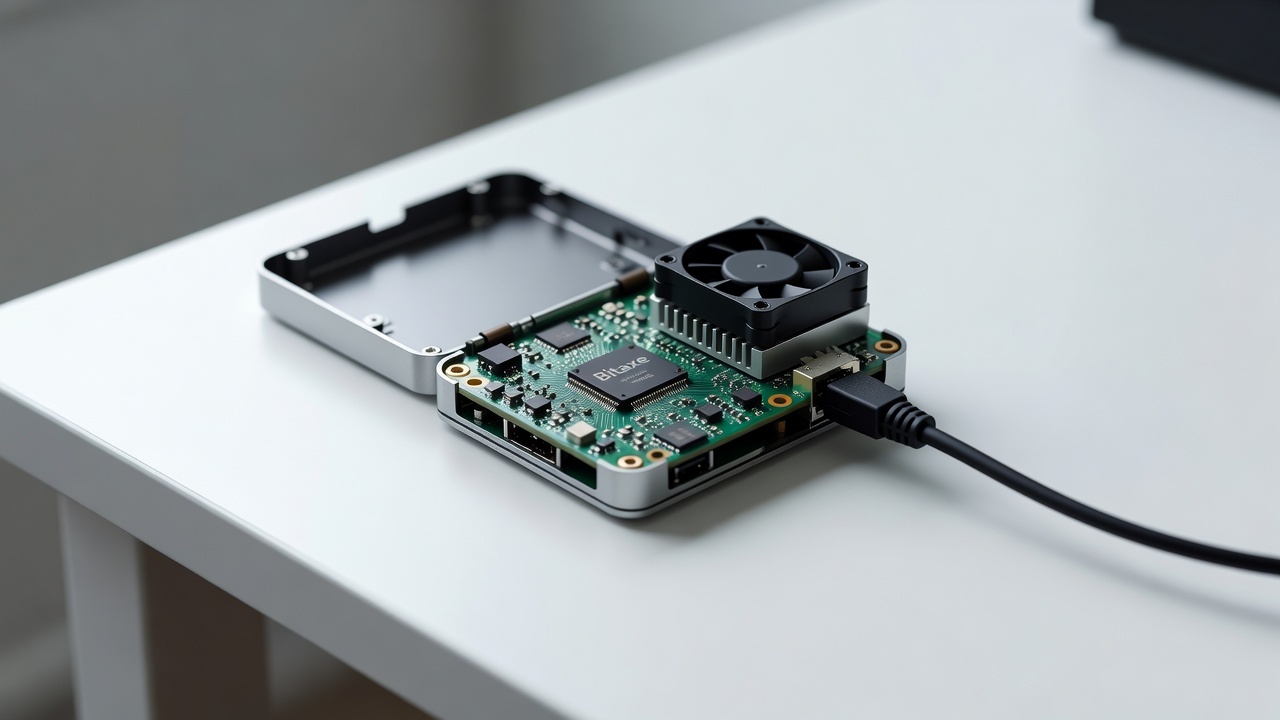
Bitaxe is an open-source solo mining device roughly the size of a deck of cards, built around a single ASIC chip. Build cost typically runs $150-300 depending on chip model and configuration. The device is aimed at enthusiasts who want to mine independently against a full blockchain node rather than through a pool, motivated by decentralization and educational interest rather than steady income.
Why Such Wins Are So Rare
Bitcoin's network hashrate in July 2026 sits around 950-1000 EH/s. A single Bitaxe device produces roughly 1-1.5 TH/s, about 600 million times less than the network's total power. The mathematical expectation of finding a block solo on such hardware is measured in tens of thousands of years.
Still, as of mid-2026, solo miners found 24 blocks over the past 12 months, up 41% year over year. The increase reflects growing enthusiast participation rather than any change in the underlying probability math.
Should You Switch to Solo Mining for a Chance at the Jackpot
Solo mining is a lottery with an extremely low win probability and high income volatility. For a home farm running a few ASICs, it's economically more rational to work through a pool with predictable payouts than to wait for a jackpot that may never come. See our detailed breakdown of solo vs pool mining for small farms in mining ROI 2026: solo vs pool.
- Solo mining fits if you're doing it for fun, to support network decentralization, or for educational purposes, and you're fine with the jackpot possibly never happening
- Pool mining fits if predictable daily income and a clear equipment payback schedule matter to you
Incidentally, large pools are currently consolidating the market: the top 4 now control over 70% of the network, see our pool consolidation breakdown. That's another argument for solo mining remaining a niche hobby rather than a mass strategy.
If you'd still like to estimate expected income mining through a pool with your hardware, use our mining profitability calculator.
Frequently Asked Questions
How much does it cost to build a Bitaxe?
Typically $150 to $300 depending on the ASIC chip model, board, and cooling. The project is open-source, with ready kits and instructions for DIY builds.
What are the odds of finding a block with one Bitaxe?
At current network difficulty, the odds for a single device are estimated at roughly 1 in 6.5 million. However, as more enthusiasts join in, such finds become more frequent across the network as a whole.
Can you combine multiple Bitaxes to improve your odds?
Yes, some enthusiasts combine several devices into a home solo mining node, but even dozens of Bitaxes provide a negligible fraction of the power of a large ASIC like the Antminer S21 XP.