
ASIC Hosting and Colocation in 2026: rates, uptime, locations
Everything below was checked on 2026-08-20 against public provider pages and industry roundups. Hosting rates move with wholesale power, so confirm the number with a sales rep before you sign anything.
- Public all-in rates worldwide run roughly $0.036 to $0.10 per kWh. The bottom of that range comes from provider marketing pages; the top is an honest Northern European number.
- US retail colocation sits at $0.06-0.09/kWh. Texas dips to $0.04-0.08 thanks to ERCOT.
- Cheapest power in the roundup data: Iceland (~$0.03), Quebec ($0.03-0.04), Paraguay ($0.03-0.05), Ethiopia and Nigeria ($0.04-0.057).
- Russian mining hotels quote 3.7-6.5 RUB/kWh. No dollar conversion here, because none of the sources pin an exchange rate.
- Explicit SLAs are rare. Sazmining lists 90% for Paraguay and 95% for Texas, Simple Mining says 95%+, OneMiners claims a 95%+ baseline SLA.
- Entry thresholds: Sazmining, Dahab Miners (UAE) and Abundant Mines take a single machine. Terahash starts at 10 ASICs, DC Mining wants 100 third party units, RAX Mining opens the conversation at 1 MW.
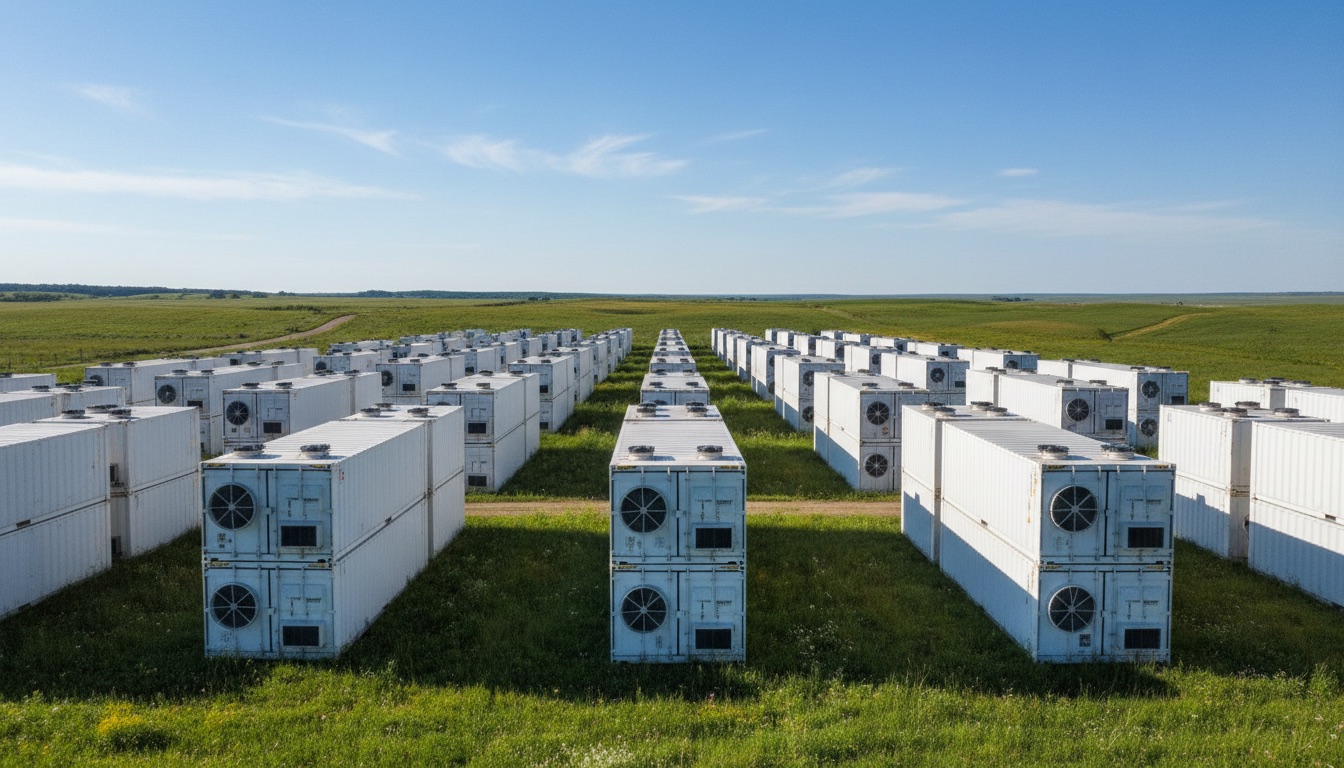
[IMAGE: photorealistic daytime shot of a containerized mining site, rows of white containers with ventilation grilles, green field and rolling hills around, clear sky, bright sunlight]
Provider comparison table
| Provider | Rate | Location | What's included | Minimum |
|---|---|---|---|---|
| Sazmining | $0.059/kWh (Paraguay), $0.062/kWh (Texas) | Paraguay (hydro), Texas (wind) | Power at cost plus a 15% service fee on mined BTC | 1 machine (they sell the ASICs) |
| Compass Mining | $0.06-0.07/kWh | Multiple US sites | Not itemized on the comparison page | Month to month, no long contract |
| Blockware Solutions | $0.07-0.08/kWh | Kentucky, Texas | Setup included | 12 month contract |
| SAZ Mining (Itaipu) | ~$0.047/kWh per the spark.money roundup; see caveat below | Paraguay | Setup included | 12 month contract |
| Abundant Mines | ~$225 per machine per month (~$0.064/kWh equivalent for an S21 Pro) | Oregon (hydro) | Power, cooling, maintenance, insurance and internet in one flat rate | Month to month, no deposit |
| EZ Blockchain | $0.065-0.085/kWh | Oklahoma, Texas | Air and container cooling | 12 months, $30 setup per miner |
| Terra Hosting | from $0.075/kWh | Texas | Air cooling | 6 months, $100 setup per miner |
| RAX Mining | from $0.065/kWh (general page), from $0.075/kWh (hosting page) | US Northwest, Southwest and Midwest, 30+ MW | Power, cooling, security, monitoring, maintenance | From 1 MW, terms negotiated |
| Simple Mining | $0.08 Starter (0-499 kW), $0.075 Premium (500-999 kW), $0.07 Enterprise (1000+ kW); from $0.065 bundled | Cedar Falls, Iowa, 10 sites | 24/7 monitoring, security, cooling, support, first 12 months of repairs free | By tier |
| OneMiners | 7 year fixed rate, per the provider: Nigeria $0.0364, Ethiopia $0.0399, UAE $0.0420, US gas $0.0553, US hydro and Texas $0.0455, Finland and Norway $0.0448, Paraguay and Brazil $0.0483, Kazakhstan $0.0490, Canada $0.0476 | 20 sites across 6 countries | Power prepaid for the contract term, 95%+ baseline SLA | Not stated |
| Dahab Miners | UAE from $0.06/kWh, Ethiopia from $0.05/kWh | Abu Dhabi; Ethiopia (hydro, 10 MW) | Power; UAE setup ~$75, no setup fee in Ethiopia | UAE from 1 unit, Ethiopia from 50 |
| Terahash Solutions | UAE $0.075 (12 mo), Finland $0.10 (12 mo), Ethiopia $0.057 (24 mo) | UAE, Finland, Ethiopia | Power at a fixed rate for the contract term | From 10 ASICs; site addresses disclosed after signing |
| DC Mining (RU) | 5.5-5.9 RUB/kWh incl. VAT | Russia, site not specified | Security, video surveillance | 3 units if bought from them, 100 for third party gear |
| MinerWorld (RU) | from 5.5 RUB/kWh incl. VAT plus a service fee | Chelyabinsk, St Petersburg, Murmansk | Industrial power tariff, monitoring, cleaning every 2 months, fan replacement | Not stated |
| GIS Mining (RU) | 3.67-6.2 RUB/kWh | Russia | Temperature sensors, video surveillance, monitoring, wholesale power purchasing | Negotiated |
| Intelion (RU) | 5.5 RUB/kWh, promo locked for 6 months | Samara | Not itemized | From 20 units |
About that SAZ Mining line at $0.047: it comes from the spark.money summary table and it contradicts the price on Sazmining's own site ($0.059 for Paraguay). Public sources don't settle which one is current, so both stay in the table. Ask the provider directly.
The OneMiners figures come from a OneMiners publication. Treat them as provider claims, not independently verified pricing. A seven year rate lock is unusual enough that the contract deserves a lawyer's afternoon.
Priced on request
Several notable operators publish nothing at all. That's normal in the wholesale segment, but it means you can't line them up against retail hosts in the same column.
- Sabre56, Wyoming. Rate is negotiated case by case.
- Riot Platforms / Whinstone, Rockdale, Texas, a 700+ MW site. Institutional clients only, no public numbers.
- LeoMining, Russia. The site shows both "from 5.8 RUB/kWh" and "from 3.6 RUB/kWh including VAT" with no indication which applies. A rep quotes the final figure.
- ValueHash, Nebraska, Kansas, New York. Cites a $0.05-0.08/kWh market range but not its own rate.
- PromMiner, Russia. One page mentions 6 RUB/kWh, with no full price list or contract terms behind it.
Region by region
These are industry-wide industrial ranges, not any single host's rate. A provider's all-in number always lands higher once cooling, security, maintenance and margin are stacked on top.
| Region | Industrial rate, $/kWh |
|---|---|
| US retail colocation, all-in | 0.06-0.09 |
| Texas (ERCOT) | 0.04-0.08 |
| Iowa, Wyoming, Georgia, North Dakota | 0.05-0.08 |
| Paraguay (Itaipu, hydro) | 0.03-0.05 |
| Quebec, Canada (hydro) | 0.03-0.04 |
| Iceland | ~0.03 |
| Kazakhstan | 0.03-0.07 (sources vary) |
| Nigeria | 0.04 |
| Ethiopia | 0.045-0.057 |
| UAE | 0.06-0.075 |
| Russia, mining hotels | 3.7-6.5 RUB/kWh |
North America
The US sells predictability and a legible legal system, and charges for it: retail stays in the $0.06-0.09 band. Texas is the outlier because of ERCOT and abundant wind, which is where the $0.04 floor comes from. That floor has a cost of its own, though. Summer peaks and curtailment programs hit your realized uptime rather than your rate card. Quebec hydro looks cheapest in the region, but interconnection quotas there are tight.
Latin America
Paraguay runs on Itaipu, and the $0.03-0.05 figures do show up in the roundups. Note that Sazmining honestly rates its Paraguay site at 90% SLA versus 95% in Texas. Five percentage points over a year works out to roughly eighteen days of downtime, which eats a meaningful chunk of the cheap kilowatt.
Africa and the Middle East
Ethiopia is the most interesting price story right now: Dahab Miners from $0.05, Terahash at $0.057 on a 24 month contract, both on hydro. The entry bar is higher than average, with Dahab asking for 50 machines minimum. The UAE costs more at $0.06-0.075, but logistics, banking and customs are far smoother. Nigeria shows $0.0364 per OneMiners, the lowest number in the whole dataset, which is reason enough to verify it independently.
Northern Europe
Terahash quotes $0.10/kWh for Finland, the most expensive line in the table. What you buy for that is cold air most of the year, a stable grid and an EU jurisdiction. OneMiners claims $0.0448 for Finland and Norway, again a provider figure, and it lands at less than half of the verified Terahash price in the same country.
Russia and Kazakhstan
Russian hosts quote 3.67-6.2 RUB/kWh at GIS Mining, 5.5-5.9 at DC Mining, and from 5.5 plus a service fee at MinerWorld. VAT is included where the source says so. This article deliberately skips a dollar conversion: no source fixes an exchange rate, and at current volatility the converted number would go stale faster than the tariff itself.
[IMAGE: photorealistic daytime view of a mountain hydroelectric dam, turquoise water, green slopes, transmission lines running into the distance, strong sunlight]
Who fits which profile
One ASIC
With a single machine your options narrow fast. From this dataset, Sazmining takes one unit (though you buy the ASIC from them), as do Dahab Miners in the UAE and Abundant Mines in Oregon. Abundant is the easiest to budget: roughly $225 per machine per month, with power, cooling, maintenance, insurance and internet inside that number and no deposit. For one S21 Pro that works out to about $0.064/kWh. Not a record, but no surprises on the invoice either.
Sazmining's model works differently. Power goes through at cost and the provider takes 15% of the mined bitcoin. When BTC rises you pay more in absolute terms; when it falls you pay less. That's closer to an option than a lease, and it should be modeled separately from dollar rates.
Home mining is still worth pricing out. If you have your own industrial connection and somewhere to put the noise, hosting solves a problem you don't have. Run both cases through the mining profitability calculator.
Ten machines
This is where the real market opens up. Terahash starts at 10 ASICs, Dahab's Ethiopia site at 50, and Simple Mining's Starter tier (up to 499 kW) charges $0.08. Ten Antminer S21 XP Hyd units at 5,676 W each draw about 57 kW, which parks you firmly in the most expensive tier at any host that prices by capacity.
Run the numbers on that same machine. The S21 XP Hyd pulls 5,676 W, so 5.676 kW across 720 hours is about 4,087 kWh a month. Ten of them come to roughly 40,870 kWh. One cent of rate difference ($0.07 versus $0.08) is about $409 a month. That assumes 100% uptime; at a realistic 95% the figures scale down proportionally. There isn't much room to negotiate at this volume, so compete the hosts on service terms instead. Simple Mining's first 12 months of free repairs, for instance, is real insurance across a fleet of ten.
Check the billing formula separately. Simple Mining bills on nameplate capacity rather than actual draw. If you undervolt, the power savings never reach you.
100 or more
Past a hundred units you're wholesale, and published price lists stop mattering. Simple Mining's Enterprise tier (1000+ kW) lists $0.07, RAX Mining starts at 1 MW with negotiated terms, and Sabre56 and Riot publish nothing as a matter of policy.
At this size three things outrank the rate: the legal form of the contract, who carries curtailment risk, and what happens to title over your hardware if the site goes bankrupt. The Compass Mining episode and similar cases in recent years showed that a cheap kilowatt doesn't help when your machines physically sit in someone else's building with an unclear legal status.
Common questions
What does ASIC hosting actually cost in 2026?
Public all-in rates fall roughly between $0.036 and $0.10 per kWh. A realistic anchor for a retail US customer is $0.06-0.09. Below $0.05 you find Ethiopia, Paraguay, Nigeria and some Russian sites, but each trades the discount for a higher minimum order, a lower stated uptime, or a harder jurisdiction.
What does an all-in rate include?
All-in means a per kWh price with power, cooling, security, monitoring and basic maintenance already folded in. There's no standard. Abundant Mines includes insurance and internet, Dahab Miners charges about $75 setup in the UAE, EZ Blockchain $30 per miner, Terra Hosting $100. Always ask for the list of exclusions in writing.
What uptime should you consider normal?
Few hosts publish an SLA. Sazmining lists 90% for Paraguay and 95% for Texas, Simple Mining states 95%+, OneMiners claims a 95%+ baseline. Use 95% as your negotiating anchor. The difference between 95% and 99% over a year is about fourteen and a half days of downtime, which usually outweighs half a cent per kilowatt.
Hosting or home mining?
Home mining wins on cost only if you have an industrial or subsidized tariff and have solved noise and heat. Hosting buys cooling, physical security and round the clock monitoring more than it buys electricity. On a residential retail tariff, hosting is almost always cheaper. With your own industrial connection, it almost always isn't.
Does hosting affect which pool you use?
Not directly, and that's worth knowing. The provider sells you power and rack space; you decide where the worker points. Some sites suggest a default pool, but that's a config setting, not an obligation. Choose payout scheme and fee on their own merits using the pool comparison.
Can you calculate profitability straight from the hosting rate?
No. The rate gives you a cost per kWh, but actual revenue also depends on network difficulty, pool fee, payout scheme and your machine's real draw, which differs from the nameplate figure. Put your own rate into the calculator and cross check it against monthly pool snapshots.
Checklist before you sign
- Get the current rate confirmed by email. Everything here was collected on 2026-08-20 and holds until the next wholesale repricing.
- Ask how billing is calculated: metered draw or nameplate.
- Get the SLA from the contract text, not the landing page, and ask what remedy applies when uptime falls short.
- Find out who pays for repairs and PSU replacements after year one.
- Check whether the site address is disclosed before signing. Terahash, for one, only reveals addresses after the contract.
- Budget for logistics and customs. For Ethiopia and Nigeria, shipping and clearance absorb part of the tariff advantage.
Further reading
- Miner hosting in 2026: how to pick an ASIC data center on site selection criteria
- Where to host ASIC miners: colocation rates and what's included on invoice structure
- Bitcoin pool comparison, August 2026 on where to point hashrate once you're deployed
- Profitability calculator for plugging in your own rate
- Pool comparison by fee and payout scheme
Data verified 2026-08-20. Provider rates and terms change; check the primary source before you commit.