
OCEAN vs Foundry USA: decentralization against the largest pool
OCEAN and Foundry USA sit at opposite ends of the Bitcoin mining pool spectrum. OCEAN charges 2% (1% through DATUM Gateway), pays miners non-custodially inside the coinbase transaction, and lets you build your own block template. Foundry USA is the largest pool by hashrate, charges undisclosed tiered fees, requires KYC and an application, and runs standard FPPS. This comparison breaks down where each one fits, who loses money picking the wrong side, and where the data runs out.
How do OCEAN and Foundry USA compare on fees?
Foundry USA does not publish a fixed fee. Pricing depends on your hashrate tier, and you find out your rate after applying and completing KYC. OCEAN lists its fee on the website: 2% standard, dropping to 1% when you mine through DATUM Gateway (which requires running your own Bitcoin full node). Neither pool publishes fee schedules granular enough to model exact net income at every scale, but the structure tells you something: Foundry negotiates, OCEAN posts a number.
| OCEAN | Foundry USA | |
|---|---|---|
| Fee | 2% (1% via DATUM) | Not publicly disclosed (tiered) |
| Fee source | ocean.xyz | pool-faq.foundrydigital.com |
| Payout model | TIDES | FPPS |
| Minimum payout | 0.01048576 BTC (on-chain); no threshold via Lightning BOLT12 | 0.01 BTC |
| Custody | Non-custodial (coinbase payout) | Custodial |
| KYC required | No | Yes (application + KYC) |
| Supported coins | BTC | BTC |
| Miner-built block templates | Yes (DATUM Gateway) | No |
| Lightning payouts | Yes (BOLT12) | No |
What payout model does each pool use, and why does it matter?
OCEAN uses TIDES, a scoring system where each proof of work is paid on average eight times across a sliding window. Income is lumpier than FPPS but smooths out over time. Foundry runs FPPS, which pays a fixed rate per share including transaction fees, regardless of whether the pool actually finds a block. For a miner who wants predictable daily income, FPPS is simpler. For a miner who values non-custodial payouts and is comfortable with variance, TIDES removes the need to trust the pool with your bitcoin between blocks.
The mechanics of FPPS, TIDES, and other payout schemes are covered in our payout model comparison.
Who is Foundry USA built for?
Foundry USA is built for institutional and large-scale miners. You cannot just point your ASIC at a stratum URL and start hashing. You fill out an application, pass KYC, and get assigned a pricing tier based on your hashrate. The pool handles everything: block template construction, transaction selection, custody, and payouts. If you run hundreds or thousands of machines and want a pool that works like a financial service provider, Foundry is designed for that.
The tradeoff is control. You do not choose which transactions go into blocks. You do not hold your own bitcoin between payouts. And you cannot see your fee rate before signing up.
Who is OCEAN built for?
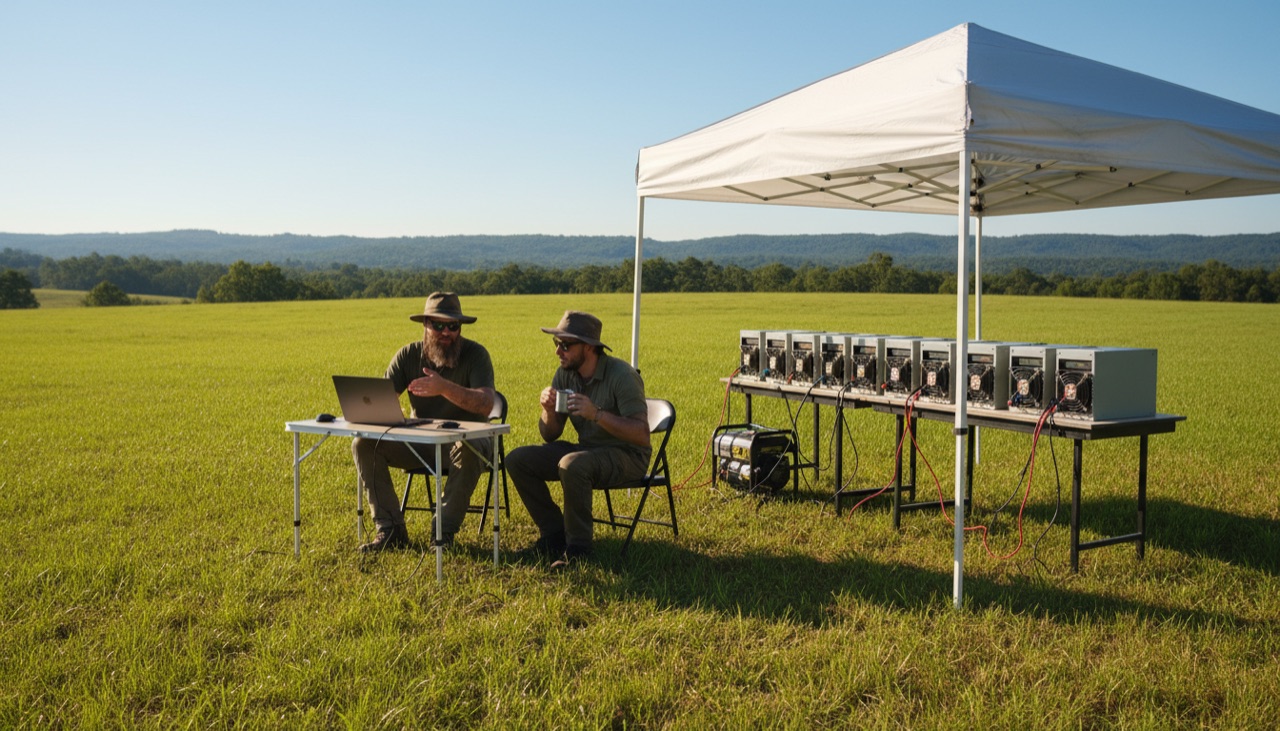
OCEAN is built for miners who care about Bitcoin's decentralization properties and are willing to do some technical work to get them. The baseline setup (pointing an ASIC at OCEAN's stratum address, 2% fee) works like any other pool. The full setup (running a Bitcoin full node, installing DATUM Gateway, 1% fee) lets you build your own block templates, which means you decide which transactions go into blocks your hashrate helps mine.
Non-custodial payouts mean your share is written directly into the coinbase transaction of each found block. The pool never holds your bitcoin. The price for this is a higher effective minimum payout (0.01048576 BTC on-chain) and a wait that scales with your hashrate. At 100 TH/s and current difficulty, reaching that threshold takes roughly 200+ days. At 1 PH/s it takes about 22 days. Lightning payouts via BOLT12 are available with no threshold, which softens the gap for smaller operations.

How long until the first payout on each pool?
Time to first payout depends on hashrate, difficulty, and BTC price. Rough estimates at current difficulty:
| Hashrate | OCEAN (0.01048576 BTC threshold) | Foundry USA (0.01 BTC threshold) |
|---|---|---|
| 100 TH/s | ~218 days | ~208 days |
| 500 TH/s | ~44 days | ~42 days |
| 1 PH/s | ~22 days | ~21 days |
| 10 PH/s | ~2 days | ~2 days |
The thresholds are close enough that payout timing is not a differentiator at scale. Below 500 TH/s, both pools make you wait months for the first onchain payout. OCEAN's Lightning option (BOLT12, no threshold) helps here. Foundry does not offer Lightning.
For context on how thresholds affect small farms, see the farm size and pool selection guide.
Does OCEAN actually decentralize mining?
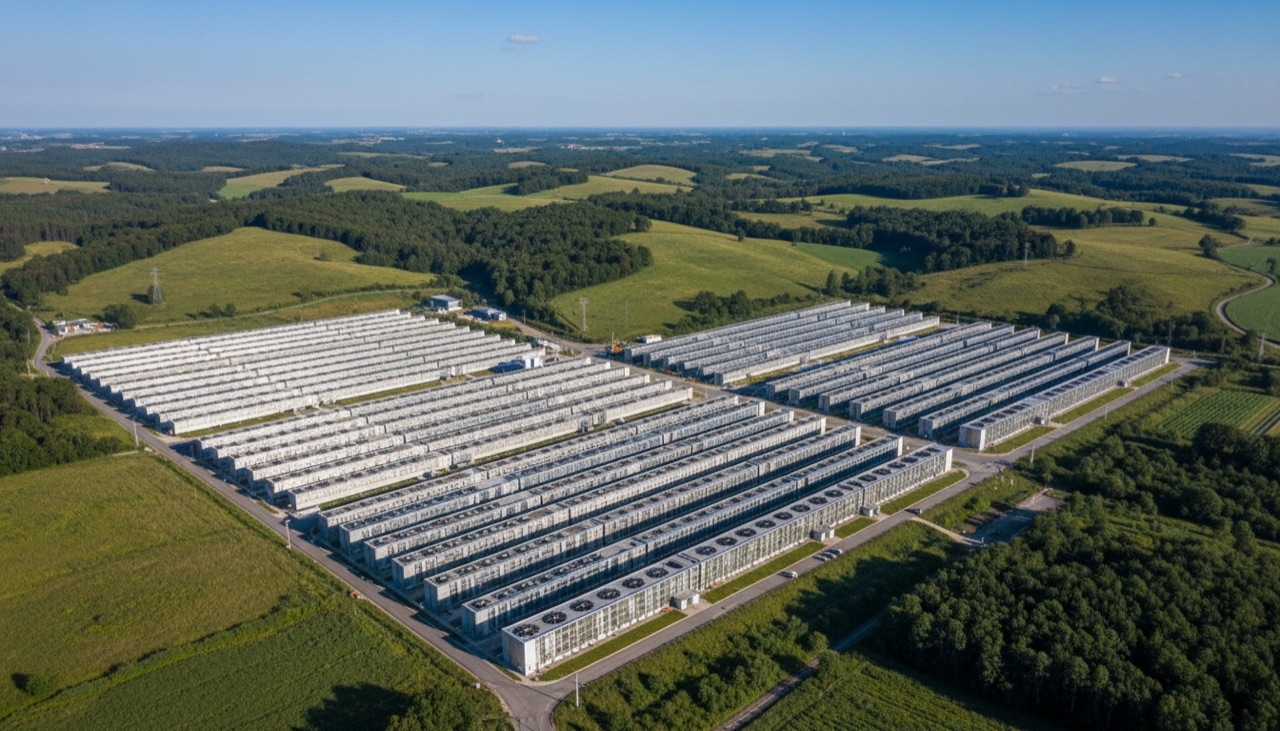
OCEAN's DATUM Gateway is the only production system where individual miners construct their own block templates today. This matters because transaction selection is the point where pools exercise power over Bitcoin's censorship resistance. When one pool controls about 24% of network hashrate (mempool.space, 7-day window, ~28.09.2026) and a single team decides which transactions go into those blocks, that is a concentration of power that Bitcoin was designed to avoid.
OCEAN with DATUM pushes that decision back to individual miners. Whether enough miners actually run DATUM to make a material difference in censorship resistance is a separate question, and one nobody has published hard numbers on.
Foundry has not indicated any plans to support miner-side transaction selection.
What are the risks of each pool?
OCEAN risks:
- Smaller pool means higher block-finding variance
- TIDES payout is lumpier than FPPS
- Non-custodial coinbase payouts create dust if the pool finds a block with many small miners in the payout
- Running DATUM requires maintaining a full node, which is another machine to keep online
Foundry USA risks:
- Undisclosed fees mean you cannot comparison-shop before committing
- KYC means your mining activity is tied to your identity
- Custodial model means the pool holds your bitcoin until payout
- Single point of control over transaction selection for a large share of network hashrate
Which pool pays more per TH/s?
Without knowing Foundry's actual fee rate, a direct comparison is impossible. If Foundry's negotiated rate for a given miner happens to be 1% or lower, it may match or beat OCEAN's DATUM rate. If it is 2% or higher, OCEAN with DATUM (at 1%) wins on fee alone.
The payout model difference (FPPS vs TIDES) also affects realized income. FPPS smooths out block luck and includes transaction fees in every payment. TIDES exposes you to more variance in the short term but should converge to similar expected value over months.
Use the profitability calculator to model net income at different fee rates and compare.
FAQ
Can I try OCEAN without running a full node?
Yes. Point your ASIC at OCEAN's stratum URL and mine at the standard 2% fee. You get non-custodial payouts and TIDES without DATUM. Running a node and DATUM Gateway drops the fee to 1% and enables block template construction.
Does Foundry USA accept individual miners?
Foundry requires an application and KYC. The pool is designed for institutional and large-scale operations. Whether a solo miner with one or two ASICs would be accepted is not clear from public documentation.
Which pool is better for a miner with 200 TH/s?
At 200 TH/s, both pools have long waits to first onchain payout. OCEAN's Lightning option (BOLT12, no threshold) makes it more practical for smaller miners. Foundry's KYC requirement and undisclosed fees make it harder to evaluate without applying first. For small operations, OCEAN's transparent pricing is easier to plan around.
Is OCEAN's non-custodial payout really safer?
Non-custodial means the pool cannot freeze, delay, or lose your bitcoin between blocks because it never holds it. The tradeoff is a higher payout threshold and slower accumulation for small miners. For miners who prioritize self-custody, this is a real benefit.
Can I switch between OCEAN and Foundry easily?
Switching from OCEAN requires waiting for accumulated balance to pay out (or using Lightning). Switching from Foundry follows their standard withdrawal process. Neither pool locks you into a contract based on public documentation.
Does either pool support coins other than BTC?
No. Both OCEAN and Foundry USA are Bitcoin-only pools.
POOL BTC is an independent comparison platform and is not affiliated with any mining pool. Fees and terms change. Verify current conditions on each pool's website before routing hashrate. Use the profitability calculator and miner ranking for current numbers.