
Bitdeer explained: what the company actually does and how its products work
Bitdeer shows up in the same search results as mining pools and cloud mining sites, but it belongs to a different category. It is a listed infrastructure company that builds data centres, designs its own ASICs, mines for its own account, and sells whatever capacity and hardware is left over. This review sticks to numbers the company published itself, with the date each one was checked. Where Bitdeer publishes nothing, the text says so instead of guessing.
The short version
- Bitdeer Technologies Group trades on NASDAQ as BTDR and is headquartered in Singapore. It files with the SEC and switched from IFRS to US GAAP on 1 January 2026, with prior periods restated.
- It is not a mining pool. In the Cloud Hash Rate service the buyer picks a third party pool at checkout, and payouts follow that pool's PPS model or a derivative of it (FPPS, PPS+).
- Q2 2026, ended 30 June 2026: revenue US$228.8m, gross loss US$8.5m at a margin of minus 3.7%, net loss US$92.3m, adjusted EBITDA US$31.1m.
- Self mining is now the core: 73.0 EH/s at the end of Q2 2026 against 16.5 EH/s a year earlier.
- Selling miners has all but stopped as a revenue line: US$0.4m in Q2 2026 versus US$69.5m in Q2 2025.
- As of 01.09.2026 the shop lists only two A3 hydro machines in stock. The whole A4 series and both DL1 models sit at pre order with no published price.
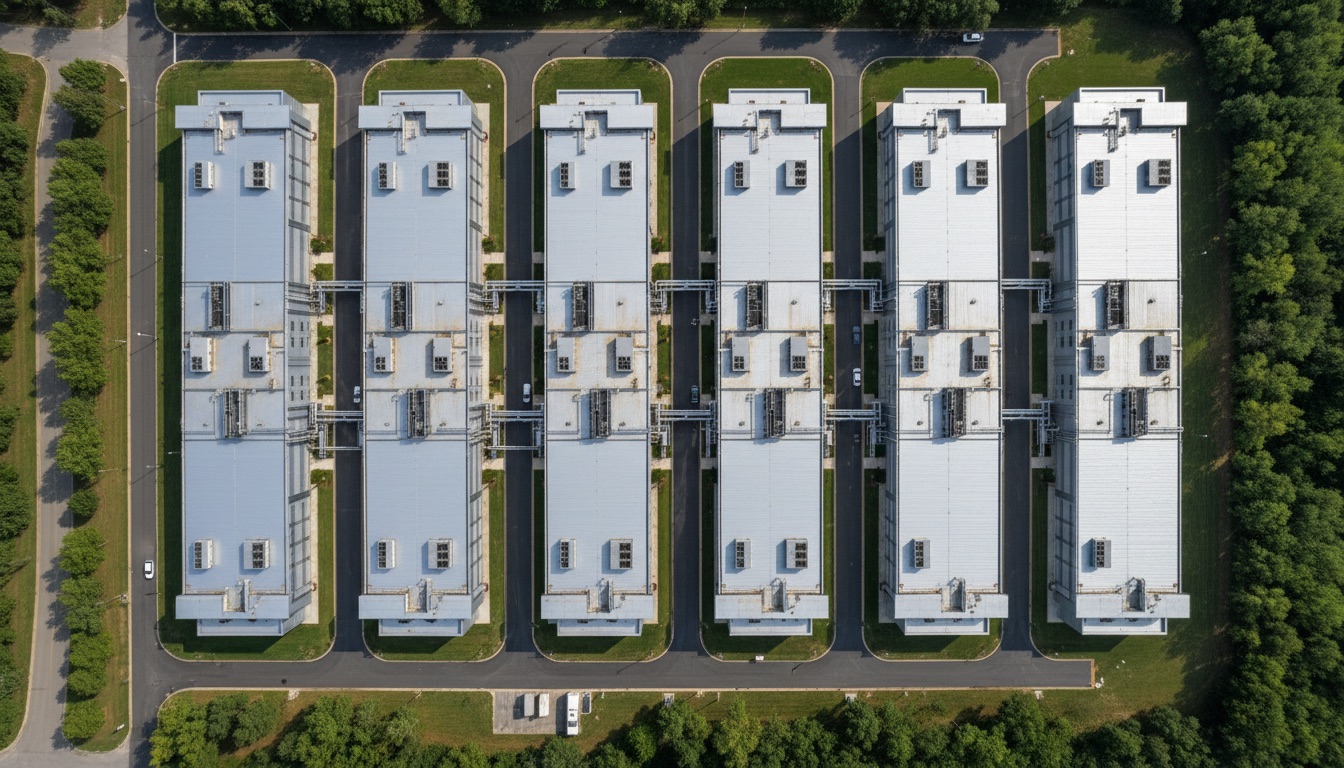
[IMAGE: bright daylight shot of containerised data centre rows on a green plateau, mountains in the distance, clear sky]
What is Bitdeer, and how is it different from a pool or a hosting provider?
Bitdeer owns infrastructure and manufactures hardware; it does not distribute block rewards the way a pool does. A pool aggregates hash rate from many miners and pays them under a published scheme. A hosting provider runs machines belonging to someone else. Bitdeer does both, but most of its revenue comes from mining its own rigs in its own facilities.
The cleanest way to see the difference is to ask who owns the machine and who carries which risk.
| Role | Who owns the hardware | What the customer pays for | Customer's main exposure |
|---|---|---|---|
| Mining pool | the customer | a fee on rewards | payout scheme, latency, pool solvency |
| Hosting provider | the customer | power and maintenance | rate, uptime, exit terms |
| Bitdeer as self miner | Bitdeer | nothing, there is no customer here | company level: BTC price, difficulty, power |
| Bitdeer as cloud hash rate seller | Bitdeer | plan fee plus a daily power charge | a contract, not a machine; the provider keeps physical control |
Bitdeer's own reporting splits self mining from the customer facing lines, which makes the economics of each side visible.
The business in seven revenue lines
The company discloses revenue across seven lines. Figures below are Q2 2026, from the release dated 10 August 2026.
| Line of business | Revenue, US$m | Cost of revenue, US$m | Gross profit (loss), US$m |
|---|---|---|---|
| Self mining | 168.4 | (171.0) | (2.7) |
| Co mining | 25.0 | (28.8) | (3.9) |
| AI Cloud | 14.0 | (16.3) | (2.3) |
| Cloud hash rate | 3.7 | (3.8) | (0.1) |
| General hosting | 2.8 | (2.8) | 0.0 |
| Membership hosting | 12.8 | (11.6) | 1.3 |
| SEALMINER and accessory sales | 0.4 | (0.2) | 0.1 |
| Total | 228.8 | (237.3) | (8.5) |
The listed lines add up to 227.1 against a quarterly total of 228.8; the remaining US$1.7m is not attributed to any of these lines in the sources.
A year earlier the mix looked nothing like this: self mining 59.3, AI Cloud 1.3, cloud hash rate 0, general hosting 9.3, membership hosting 14.6, SEALMINER sales 69.5, total 155.6.
Two things stand out. Membership hosting was the only line with a meaningful positive gross result in the quarter, at plus US$1.3m. And hardware sales, which brought in US$69.5m a year ago, produced US$0.4m. The release explains why in accounting terms: wafers, chips, work in progress and finished SEALMINER units moved out of inventories and into property, plant and equipment for self mining and co mining use. Inventories dropped from US$252.0m to zero, while PP&E went from US$1.1bn to US$2.1bn.
In plain terms, the manufacturer stopped selling most of its output and plugged it into its own farms. If you are shopping for an ASIC, that matters more than any income statement line: the vendor is bidding against you for its own machines.
How big is the self mining fleet?
At the end of Q2 2026 the self mining fleet stood at 73.0 EH/s across 243,000 machines, more than four times the level a year earlier. Total hash rate under management, which the company defines as self mining plus other proprietary plus third party hosting, was 86.1 EH/s; co mining is reported separately on top of that, at 15.9 EH/s. Fleet efficiency averages 15.8 J/TH at a power cost of US$44 per MWh. The quarter on quarter detail:
| Metric | Q2 2026 | Q2 2025 |
|---|---|---|
| Self mining hash rate, EH/s | 73.0 | 16.5 |
| Other proprietary, EH/s | 4.9 | 0.2 |
| Hosting, EH/s | 8.2 | 13.9 |
| Total hash rate under management, EH/s | 86.1 | 30.6 |
| Co mining, EH/s | 15.9 | 0 |
| Own miners, units | 243,000 | 114,000 |
| Hosted miners, units | 46,000 | 86,000 |
| Co mining miners, units | 56,000 | 0 |
| BTC mined | 2,694 | 565 |
| BTC held | 150 | 1,502 |
| Power consumed, MWh | 2,537,000 | 1,180,000 |
| Average electricity cost, US$/MWh | 44 | 43 |
| Average fleet efficiency, J/TH | 15.8 | 25.7 |
Average self mining hash rate for the quarter came in at 69.5 EH/s, up 389.4% from 14.2 EH/s. Average co mining hash rate was 11.4 EH/s.
Watch the two lines that moved down. Third party hosting shrank from 13.9 to 8.2 EH/s and from 86,000 to 46,000 machines, so capacity is being redirected to owned hardware. And the BTC balance fell from 1,502 coins to 150, meaning production is being sold rather than accumulated. That treasury question got its own piece here: Bitdeer mined 921 BTC but the small reserve raises the real question. The hash rate ranking angle is covered in Bitdeer overtakes MARA in hash rate.
The last monthly operational update, for July 2026, put self mining at 76.7 EH/s, other proprietary at 5.0, total proprietary at 81.7 EH/s and co mining at 18.7 EH/s, with 1,190 BTC mined and 257 BTC held. AI Cloud reported roughly US$76m ARR, 4,248 GPUs deployed at about 95% utilisation, of which 3,517 sit under external subscription. The same release announced a move from monthly to quarterly infrastructure updates, so there is no August 2026 sheet as of 01.09.2026 and none is coming separately.
Where the megawatts are
As of 31 July 2026: 1,752 MW online, 1,228.2 MW in the pipeline, 2,980.2 MW in total.
| Site | Capacity | Status |
|---|---|---|
| Rockdale, Texas | 563 MW | online, plus 179 MW in pipeline |
| Jigmeling, Bhutan | 500 MW | online |
| Massillon, Ohio | 174 MW | online |
| Gedu, Bhutan | 100 MW | online |
| Knoxville, Tennessee | 86 MW | in the online total, but the company gives ready for service as Q3 2027 |
| Molde, Norway | 84 MW | online |
| Oromia, Ethiopia | 50 MW | online |
| Clarington, Ohio | 570 MW | pipeline |
| Weathersfield, Ohio | 300 MW | pipeline |
| Fox Creek, Alberta | 101 MW | pipeline, with on site gas generation |
| Tydal, Norway | 66.5 + 66.5 + 47 MW | pipeline, three phases |
Bitdeer flags its own ready for service dates as forward looking. Clarington, the single largest pipeline item at 570 MW, is subject to litigation brought by a neighbouring company, American Heavy Plate Solutions, LLC, and the timing of that capacity may slip. Since Clarington is close to half the entire pipeline, that is not a footnote.
[IMAGE: sunny fjord landscape in Norway, hydro power plant, green slopes, a low data centre building nearby, light colour palette]
What is known about the SEALMINER line
SEALMINER is Bitdeer's in house ASIC family, built on its own SEAL chips. Official specifications currently look like this.
| Model | Hash rate | Power | Efficiency | Cooling | Algorithm |
|---|---|---|---|---|---|
| A4 Ultra Hydro | 886 TH/s | 8372.7 W | 9.45 J/T | hydro | SHA-256 |
| A4 Pro Hydro | 680 TH/s | 7412 W | 10.9 J/T | hydro | SHA-256 |
| A4 Pro Air | 336 TH/s | 3662.4 W | 10.9 J/T | air | SHA-256 |
| A3 Pro Hydro | 660 TH/s | 8250 W | 12.5 J/T | hydro | SHA-256 |
| A3 Hydro | 500 TH/s | 6750 W | 13.5 J/T | hydro | SHA-256 |
| A3 Pro Air | 290 TH/s | 3625 W | 12.5 J/T | air | SHA-256 |
| A3 Air | 260 TH/s | 3640 W | 14 J/T | air | SHA-256 |
| DL1 Hydro | 52.5 GH/s | 7823 W | 149 J/G | hydro | Scrypt |
| DL1 Air | 25 GH/s | 3725 W | 149 J/G | air | Scrypt |
| A2 Pro Hydro | 500 TH/s | 7450 W | 14.9 J/T | hydro | SHA-256 |
| A2 Pro Air | 260 TH/s | 3874 W | 14.9 J/T | air | SHA-256 |
| A2 | 226 TH/s | 3729 W | 16.5 J/T | air | SHA-256 |
The A4 series was announced on 07.04.2026 on the SEAL04 chip. The A4 Ultra Hydro measures 665 x 482 x 86 mm, weighs about 23.5 kg, is a 2U unit and mines BTC, BCH and BSV.
DL1 is the Scrypt branch, aimed at LTC, DOGE, BELLS, JKC, LKY and PEP. Operating modes, as announced:
| Model | Mode | Hash rate | Efficiency | Power |
|---|---|---|---|---|
| DL1 Air, launched 16.03.2026 | standard | 25 GH/s | 149 J/GH | 3725 W |
| DL1 Air | low power | 20.5 GH/s | 136 J/GH | not published |
| DL1 Hydro, launched 01.06.2026 | standard | 52.5 GH/s | 149 J/GH | 7823 W |
| DL1 Hydro | high hash rate | 55 GH/s | 157 J/GH | not published |
| DL1 Hydro | low power | 42.5 GH/s | 132 J/GH | not published |
Dimensions: DL1 Air is 197 x 365 x 292 mm at 15.5 kg, DL1 Hydro is a 2U unit at 21 kg.
The chip roadmap Bitdeer publishes on its own shop page reads: SEAL01 at 18.1 J/TH in Q1 2024, SEAL02 at 13.5 J/TH in Q3 2024, SEAL03 at 9.7 J/TH in Q1 2025, SEAL04 at 6 to 7 J/TH in Q4 2025. Those are chip level numbers. The finished A4 Ultra Hydro is rated at 9.45 J/TH at the wall.
One caveat belongs in every spreadsheet built on these specs. The manufacturer states a tolerance of up to plus or minus 5% on efficiency and up to plus or minus 10% on hash rate and power draw, with final figures determined by delivered units. Model the low end, not the datasheet. The quickest way to test a scenario against your own power price is the mining profitability calculator, where hash rate, watts and cost per kWh all go in as inputs.
Where the sources disagree
Three discrepancies worth knowing before you quote any A4 number.
- What the 9.45 J/TH figure measures. The 07.04.2026 press release and the product page both pair 886 TH/s with 8372.7 W, which arithmetically is 9.45 J/T for the whole machine. A third party transcript of the Q2 2026 earnings call describes the same figure as chip level efficiency. Bitdeer's own roadmap argues against the second reading, since SEAL04 is listed at 6 to 7 J/TH. Treat 9.45 J/TH as a machine spec.
- A4 hash rate. The company home page says "up to 900 TH/s" while the product page and the press release say 886 TH/s. The gap fits inside the stated plus or minus 10% tolerance, but 886 TH/s is the number to model.
- A "high performance mode up to 1,000 TH/s" for the A4 Ultra Hydro circulates on review sites and reseller listings. No Bitdeer material claims that mode for the A4, so it should not go into any ROI calculation.
What can you actually buy today?
As of 01.09.2026 the manufacturer has two hydro machines in stock: the A3 Pro Hydro at US$9,900 and the A3 Hydro at US$6,750. The entire A4 series and both DL1 models are pre order only, with no published price and no shipping dates. The A2 series is sold out. Buying an A4 direct from Bitdeer is not possible today.
| Model | Status | List price | Discounted |
|---|---|---|---|
| A3 Pro Hydro | in stock | US$9,900 (US$15/T) | US$9,478 (US$14.36/T) |
| A3 Hydro | in stock | US$6,750 (US$13.5/T) | US$6,411 (US$12.82/T) |
| A4 Ultra Hydro, A4 Pro Hydro, A4 Pro Air | pre order | not published, page reads "Stay tuned" | none |
| A3 Pro Air, A3 Air | pre order | not published | none |
| DL1 Hydro, DL1 Air | pre order | not published | none |
| A2 Pro Hydro | sold out | US$6,500 (US$13/T) | US$5,897 (US$11.8/T) |
| A2 Pro Air | sold out | US$3,380 (US$13/T) | US$3,067 (US$11.8/T) |
| A2 | sold out | US$2,892.8 (US$12.8/T) | none |
Shipping dates for A4 and DL1 are not published either. Warranty terms on the product page: 365 days from the shipping date, with the buyer covering shipping to the service centre and Bitdeer covering the return leg. Orders cannot be cancelled, exchanged or refunded once placed, which deserves a second read before anyone prepays for hardware that has no delivery date attached.
Beyond miners, the shop also carries Minerbase containers with a mobile cooling system, accessories, a miner auction, Priority Purchase Right giveaways and a US$0.99 purchase right reservation.
If you are comparing procurement channels in general, the vendor and prepayment risk breakdown lives in where to buy an ASIC miner.
How does cloud hash rate work, and what is the structural risk?
Cloud hash rate is a contract on the output of someone else's machines, not a rental of a specific unit. The buyer pays a plan fee and then a separate daily power charge, and selects a third party pool at checkout. The hardware stays with Bitdeer. The company does not publish the conditions under which a plan's machines get switched off, so that clause has to be read in the agreement itself.
As of 01.09.2026 the cloud mining page lists only Antminer S19Pro plans, both marked 100% sold:
- 180 days, 50 TH/s: US$26.00, hash rate fee US$0.0029 per TH per day, electricity US$0.0531 per TH per day.
- 30 days, 10 TH/s: US$1.00, promotional price US$0.75.
The second plan reads like a trial rather than an investment product. Segment revenue confirms the scale: cloud hash rate produced US$3.7m in the quarter at a gross loss of US$0.1m, under 2% of company revenue.
The structural risks are the same at any provider, not specific to this one:
- The provider owns the machine. You buy a claim on output, not an asset you can move or resell.
- Power is usually billed outside the headline plan fee and charged daily. When hash price falls, that daily charge can consume the output.
- A shutdown threshold is standard in this product category: if output stops covering electricity, mining is halted while the paid term keeps running. Bitdeer does not publish its own threshold, which makes it a contract question rather than a known figure.
- BTC price risk stays entirely with the buyer, and downtime risk is split by contract, not always in the buyer's favour.
- There is normally no early exit and no secondary market for the contract.
The wider genre, including how to spot outright scams, is covered in cloud mining: pros, cons and how to avoid scammers.
Hosting, membership hosting and co mining
Three different arrangements sit under similar names. General hosting and membership hosting both cover customer owned machines in Bitdeer facilities and are reported as separate revenue lines, but the company does not publish what separates the two commercially, so the difference in terms cannot be stated from official sources. Co mining is the reverse direction: Bitdeer's own machines placed in partner facilities with the result shared.
| Model | Whose hardware | Whose facility | Q2 2026 revenue | Gross result |
|---|---|---|---|---|
| General hosting | customer | Bitdeer | US$2.8m | 0.0 |
| Membership hosting | customer | Bitdeer | US$12.8m | +US$1.3m |
| Co mining | Bitdeer | partner | US$25.0m | -US$3.9m |
Co mining went from zero to 15.9 EH/s and 56,000 machines in a year. The market implication is that a share of third party facility capacity is now occupied by Bitdeer hardware, capacity that might otherwise have gone to retail hosting customers. Bitdeer does not publish per site hosting rates for third party ASICs, so its offer cannot be benchmarked line by line. For independent providers, see the comparison in ASIC miner hosting 2026: rates, locations and terms compared and the hosting section.
How to read the filings as a miner rather than an investor
An equity investor looks at margins and multiples. A miner gets more out of a different set of lines, because they describe the competition for blocks and for megawatts.
- Average fleet efficiency. 15.8 J/TH in Q2 2026 against 25.7 J/TH a year earlier. Anything materially worse than that is losing on unit cost to an operator running at industrial scale.
- Average power cost. US$44 per MWh, achieved with sites in Bhutan, Norway and Ethiopia. Benchmark your own rate against that, not against the retail quote from the hosting provider next door.
- Self mining hash rate and its trajectory. Going from 16.5 to 73.0 EH/s in a year is difficulty added to the network by a single participant.
- Hosting measured in EH/s and units. The drop from 13.9 to 8.2 EH/s says capacity is being reallocated to owned fleet ahead of third party customers.
- BTC held. 150 coins against 2,694 mined in the quarter indicates production is being sold to fund construction.
- Capital expenditure and its split. US$266.0m for the quarter, of which US$150.0m went to SEALMINER production for self mining and co mining. The company does not break the remaining US$116.0m down by purpose, so any split of it is guesswork.
- Debt. Loans of US$1.8bn against total assets of US$3.446bn, cash and restricted cash of US$496.3m and digital assets and receivables of US$196.9m. Leverage decides whether a loss making quarter gets absorbed or passed through into customer terms.
- R&D. US$36.1m versus US$20.6m a year earlier, which is the leading indicator for the next chip generation.
One more line for context. AI Cloud produced US$14.0m of revenue at a gross loss of US$2.3m, yet the contracts announced around it dwarf the segment that reports them.
| Site | Capacity | Term | Contracted revenue | Also disclosed |
|---|---|---|---|---|
| Tydal, Norway (Volta subsidiary) | 121 IT MW of NVIDIA GPU capacity | 16 years, one eight year extension | about US$4.7bn over the base term, up to US$8.0bn with the extension | expected letters of credit of about US$1.3bn |
| A102, Malaysia | 9.5 MW | long term offtake agreements | above US$800m in aggregate | fully contracted |
| Johor Bahru | 21.7 IT MW | 10 years | not disclosed | handover expected Q1 2027, designed around 128 NVIDIA GB300 NVL72 systems |
For a miner the takeaway is blunt: the bidding war for power is no longer only against other miners, and the other bidder pays more.
[IMAGE: bright infographic over a summer field, two capacity columns compared, bitcoin mining versus AI workload, daylight]
Owning hardware plus hosting versus buying cloud hash rate
A like for like price comparison is not possible while A4 prices are unpublished and no new cloud plans are on sale. What can be compared is the shape of the deal.
| Criterion | Own hardware plus hosting | Cloud hash rate |
|---|---|---|
| Who owns the machine | you | the provider |
| Asset at the end of the term | a used ASIC you can sell | nothing |
| Entry cost | hardware price plus hosting deposit | plan fee |
| Who picks the pool | you | you, at checkout |
| Who pays for power | you, at the hosting rate | you, as a separate daily charge |
| Who decides on shutdown | you and the host, per contract | the provider |
| Logistics and customs risk | yours | none |
| Repairs and warranty | yours; SEALMINER covers 365 days from shipping | the provider's problem |
| Exit liquidity | resale of hardware | usually none |
The practical rule of thumb: a cloud plan buys exposure to hash rate without logistics, and gives up the asset and the control. Owned hardware keeps residual value and control, and demands space, a power rate and hands on site. If you are pricing the second route, start from your cost per kWh, run it through the profitability calculator, and only then compare the result against a cloud plan over the same period.
Contract checklist
The same questions apply to a hardware order and to a cloud plan.
- Dates. Does the contract state a shipping date or a power on date, and what happens if it is missed. For any pre order item with no published date, this is question one.
- Returns. The product page states that orders cannot be cancelled, exchanged or refunded. Check whether that clause is repeated in the agreement you sign.
- Warranty. 365 days from shipping, with outbound shipping to the service centre at the buyer's cost. Ask where the service centre physically is and how long a repair cycle takes.
- Spec tolerance. Plus or minus 5% on efficiency and plus or minus 10% on hash rate and power is the manufacturer's own disclaimer. Build the model on the low end.
- Shutdown threshold in cloud plans. At what output level does mining stop, does the paid term keep running during a stoppage, and is any fee refunded.
- The electricity formula. Is the per TH daily rate fixed, under what conditions is it revised, and who records actual consumption.
- Pool choice and payout model. In Cloud Hash Rate the buyer selects the pool, and payouts follow that pool's scheme. Verify the fee and the model with the pool itself.
- Jurisdiction and site. Country drives the power rate, the regulatory exposure and the schedule. A site in the pipeline is not a site in production.
- Force majeure and the right to reschedule. The company marks its own ready for service dates as forward looking, and Clarington is in litigation. Check who absorbs a delay.
What Bitdeer does not publish
No estimates here, just the gaps to keep in mind before running any numbers:
- prices for the A4 series and both DL1 models: pre order status, the page says "Stay tuned";
- shipping and delivery dates for A4 and DL1: no dates on the official site;
- SEALMINER production volume in units or EH/s per quarter: not disclosed in the filings;
- manufacturing cost per TH and capex per EH/s of owned fleet: not disclosed;
- which pools receive the company's own hash rate: not officially stated;
- whether Bitdeer operates a mining pool of its own: no confirmation found, and the official service agreement describes only the buyer selecting a third party pool;
- AI Cloud revenue by customer and the name of the end tenant at Tydal: only a Volta subsidiary and a "leading AI lab" are named;
- an August 2026 operational update: not published as of 01.09.2026, since reporting moved to a quarterly cadence.
FAQ
Is Bitdeer a mining pool?
No. Nothing in the company's official materials describes a proprietary pool. In the Cloud Hash Rate service the buyer selects a third party pool at checkout, and payouts follow that pool's PPS model or a derivative such as FPPS or PPS+. Check the fee and the payout scheme with the pool itself.
Can I buy a SEALMINER A4 right now?
As of 01.09.2026 every A4 variant is listed as pre order with no published price and a "Stay tuned" note on the product page. No shipping dates are given. Only A3 Pro Hydro and A3 Hydro show as in stock, and the A2 series is sold out. Reseller prices are not manufacturer prices.
How efficient is SEALMINER compared with the rest of the market?
The A4 Ultra Hydro is rated at 9.45 J/TH, from 886 TH/s at 8372.7 W. For scale, Bitdeer's own fleet averaged 15.8 J/TH in Q2 2026. The sources used for this article do not contain matching figures for competing vendor models, and inventing them would defeat the purpose.
Why is the company losing money while hash rate grows?
Q2 2026 closed with a US$8.5m gross loss and a US$92.3m net loss on US$228.8m of revenue, alongside US$31.1m of adjusted EBITDA. Self mining cost of revenue included US$84.7m of electricity plus US$79.8m of depreciation and share based compensation. Fleet expansion loads depreciation before it delivers output.
Should I buy cloud hash rate instead of an ASIC?
They are different deals, not different price points. A cloud plan buys exposure without logistics or repairs, and leaves no asset, no control over shutdown and no exit. Owned hardware retains resale value and demands a power rate, space and maintenance. Model both over your own horizon and your own kWh cost.
Sources
- Bitdeer Q2 2026 results release, 10 August 2026, ir.bitdeer.com.
- Bitdeer July 2026 production and operations update, 26 August 2026, ir.bitdeer.com.
- Bitdeer product announcements: SEALMINER A4 series (07.04.2026), DL1 Air (16.03.2026), DL1 Hydro (01.06.2026).
- bitdeer.com/shop and bitdeer.com/cloud-mining, checked 01.09.2026.
- Cloud Hash Rate Service Agreement, m.bitdeer.com/en/info/125.
POOL BTC is an independent comparison site for mining pools, calculators and services. We do not sell hash rate, do not host hardware and have no affiliation with Bitdeer. This article is reference material, not investment advice.